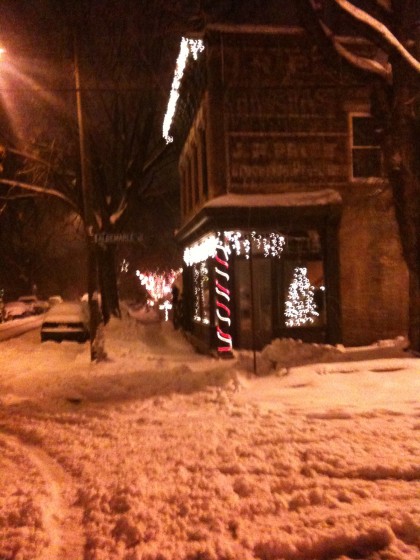
Laurel Street in (Snow) Holiday Mood
Reply

According to this Facebook page, there is a snowball fight scheduled for Monroe Park this evening. Hopefully there will be some fresh snow for it. NO ROCKS!
From Dec. 19th, 1902 edition of Richmond dispatch:
HOUND MUSES RIOT, Oregon Hill Mob Bulldozes Dog- Catchers Without Avail.
A hound dog on Oregon Hill almost precipitated a riot in that section yesterday morning. The dog-catchers happened to be in the locality, performing their duties, and among the dogs they caught was a hound belonging to some lover of sports on the “hill.”
When the owner found that the men had captured his dog he immediately told a number of his friends, and they demanded the city men to release the canine; but the men refused, and the situation looked very serious, for about ten minutes.
The crowd grew larger and larger. The wagon drove off, and a mob composed of men, women, and children, followed in pursuit. The angry mob wreaked their vengeance on the catchers by throwing at them sticks and tocks and every conceivable thing they could put their hands on.
There was only one of the dog men hit, this being Mr. Biackburn, who was struck on the head with a rock, but not seriously hurt. An effort will be made today to find the men who caused the trouble, and they will be prosecuted to the full extent of the law. The charge preferred will be “interference with an officer of the law. in the “discharge of his duty.”
The men were unable to cope with the situation, as none of them had weapons, and were forced to retreat towards the city. When they reached Broad street the mob left off the chase and returned to Oregon Hill without the hound.
From the Richmond Dispatch, December 18th, 1900:
Charlie Pettus, a son of Capitol-Policeman Pettus, took an involuntary cold bath Sunday afternoon. He fell into the canal at the foot of Oregon Hill. The youth caught hold of a post and sustained his head above water until Mr. Charles Hartman jumped in and landed him on the bank.
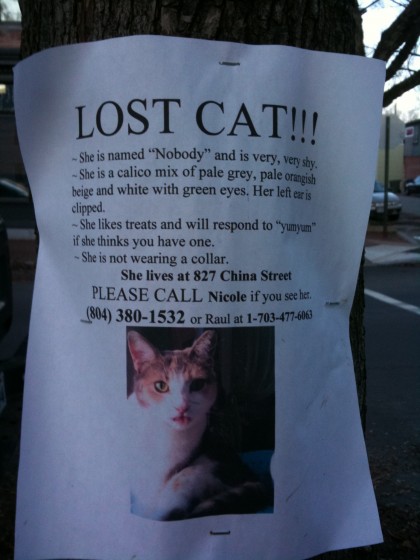
I heard people calling out her name last night while searching and I still see the flyers up around the neighborhood, so my guess is that this cat, named ‘Nobody’, is still missing and needs to be found.
From the Preservation Nation blog:
Window Wednesday
by National Trust for Historic Preservation on December 16th, 2009
Original windows matter. From dramatic Gothic masterpieces to the colorful details of stained glass, these gems are instrumental in telling the special stories of our older and historic homes and buildings. For this reason (and so many more), we’ve launched a Weatherization Guide to show homeowners how they can hang on to their unique windows and still meet their goals for going green and achieving greater energy efficiency. Each Wednesday, we’ll take that a step further and inject a little TLC into the blogosphere by spotlighting a user-submitted photo of an older or historic window for the world to see.
Bookmark our Weatherization Guide as a resource for making your older or historic home more eco-friendly without compromising its character. Want to give your favorite window a moment in the limelight? Grab your digital camera and join our Love Your Historic Windows photo group on Flickr for a chance to be next week’s spotlight.
From announcement:
Come to the Byrd House Renegade Market – Tuesdays from 3 to 6 pm
This week our gang of 5-7 wild bunch vendors will feature such things as Stewing Chickens, Holidays Wreaths & Greens, Chicken Eggs, Egg Noodles, Honey, home-baked Breads, Jams, Pickles, Leafy Greens, Turkey and Turkey Eggs, Sweet Potatoes, Rabbit, Really real Butter, Cider, Focaccia, Apples, Apple Butters…such good stuff!
Byrd House Market helped debut the Save Our Food Holiday Festival at the Farm Bureau this past Saturday at the new fairgrounds in Caroline County. We were visited by lots of people who had heard about our market on the news or through friends, were delighted to see the bounty of our vendors and our WBCH kids gardening, selling and shopping at the market. We met farmers and wine-makers, long-time locals and new neighbors and each one walked away with a flier listing each of our vendors and our new BHM bumper sticker: “Eat Good. Grow Great.” Special thanks to Epic Gardens, Pleasant Field, Empress Farm and Perennial Pleasures Plant Pharm for their donations to our booth display!
Check byrdhousemarket.blogspot.com for a recipe – BHM Lightly Curried Winter Vegetable Stew!
We’ll have cocoa for the kids this week, so come on by! And get the new “Eat Good. Grow Great.” bumper sticker, too.
Ana Edwards
BHM Market Manager—
Byrd House Market
William Byrd Community House
224 South Cherry Street
Richmond, VA 23220
ByrdHouseMarket@gmail.com
(804) 643-2717
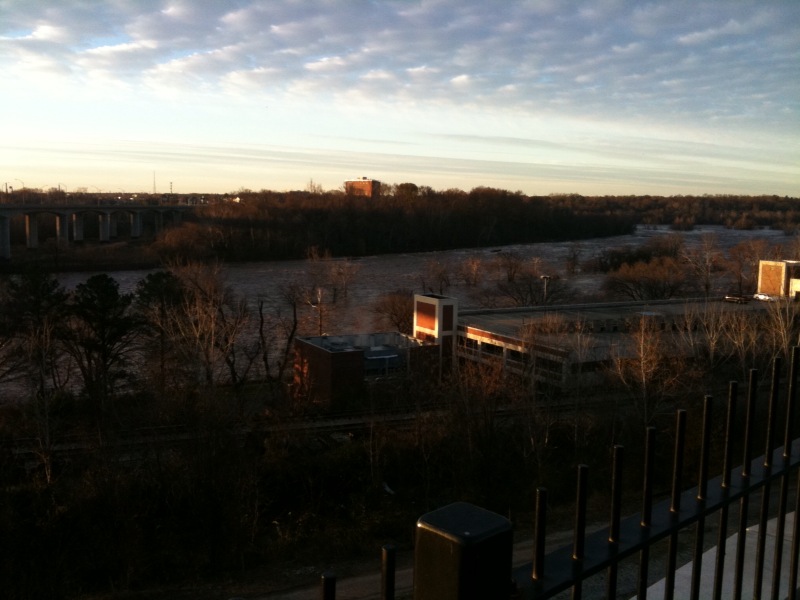
THE FLOOD WARNING CONTINUES FOR THE JAMES RIVER AT RICHMOND WESTHAM *
UNTIL SATURDAY MORNING…OR UNTIL THE WARNING IS CANCELLED. * AT 09:30
AM THURSDAY THE STAGE WAS 13.5 FEET * MINOR FLOODING IS OCCURRING AND
MINOR FLOODING IS FORECAST. * FLOOD STAGE IS 12.0 FEET *
FORECAST…THE RIVER WILL CONTINUE RISING TO NEAR 13.7 FEET BY
TONIGHT. THE RIVER WILL FALL BELOW FLOOD STAGE SATURDAY MORNING. * AT
13.0 FEET…APPROXIMATELY 20 ACRES OF LOWLAND FLOODED IN VICINITY OF
GAGE. THIS RIVER LEVEL IS COMPARABLE TO A PREVIOUS CREST OF 12.9 FEET
ON MAR 18 2007.
From a neighbor:
Help raise money for
by EATING PIZZA!! That’s right!
Here’s what you do:
Come to CiCi’s
7516 West Broad Street
on THURSDAY, DECEMBER 10,
from 5-8 p.m.
and mention your school at the
register.(Tell your friends and family to do the same) Enjoy all the pizza you can eat!
CiCi’s will donate 15% of your net sales back to
your school. Raising money has never been easier!
So, bring a friend and enjoy all the pizza, pasta,
salad and dessert you want!