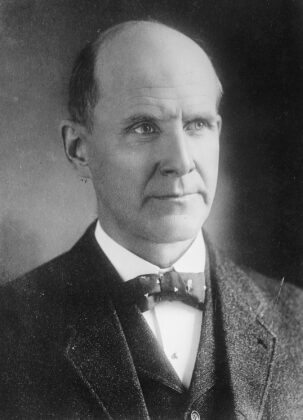
On March 27, 1911, Eugene V. Debs speaks before more than 2,200 people at the City Auditorium (the building that VCU turned into the Cary Street VCU Student Gym).

On March 27, 1911, Eugene V. Debs speaks before more than 2,200 people at the City Auditorium (the building that VCU turned into the Cary Street VCU Student Gym).
For the last 100 years, nearly every major progressive reform in the United States was first championed by third parties — and opposed or ignored by both Democrats and Republicans.
Populists (1890s): Mary Elizabeth Lease and James B. Weaver demanded public banking, railroad regulation, and the eight-hour day. Republicans defended industrial capital; Democrats were divided and often aligned with business interests.
Socialists (early 1900s): Eugene V. Debs and Norman Thomas called for Social Security, unemployment insurance, and labor protections decades before the New Deal. Both parties marginalized them while courts and politicians repressed labor organizing.
Progressives (1940s): Henry A. Wallace ran on desegregation, anti-lynching laws, and coexistence with the Soviet Union. Southern Democrats upheld segregation, while Republicans largely avoided confronting Jim Crow at the federal level.
Black Power (1960s–70s): The Black Panther Party and leaders like Eldridge Cleaver advanced community control, free social programs, and police accountability. Federal agencies and local governments surveilled and repressed these efforts rather than adopting them.
Greens & independents (today): Ralph Nader and Jill Stein advance Medicare for All, a Green New Deal, and corporate accountability. Democratic leadership resists structural change; Republicans openly oppose it.
The historical pattern is consistent: third parties introduce transformative ideas, the major parties resist or suppress them, and only later adopt watered-down versions under pressure.
That’s not theory — it’s the historical record.