Trash/Recycling Pickup Tomorrow

This Wednesday is a red Wednesday, which means trash and recycling pickup. Please make sure you pick up containers after pickup tomorrow night. They do not belong on the sidewalk after tomorrow night. Please also keep in mind that the City is supposed to be doing leaf removal and street cleaning this week.

In order to take your recycling to the next level, read this: 10 ways to improve your recycling.

In recycling news, three cities in Hampton Roads are using high-tech computer technology to track how often residents are recycling.

Commonwealth’s Veterans Day Ceremony Tomorrow

From Virginia War Memorial website:

Commonwealth’s Veterans Day Ceremony 11/11/2014 10:00 AM – 11:00 AM
We honor all veterans who served our country and remember those who made the ultimate sacrifice. Governor Terry McAuliffe is the invited speaker. This event coincides with the signing of the WWI Armistice on November 11, 1918, with the playing of Taps at the conclusion of the ceremony. The 100th Anniversary of WWI is also commemorated. Co-hosted with the 11th District American Legion.

History: BELLE ISLE REVISITED

Oregon Hill historian Tom Elliott sent this moving account of the Civil War prisoner camp on
Belle Isle:

From the National Tribune, 11/10/1892

BELLE ISLE REVISITED.
A Loudoun Ranger Taken in the Spot where He Starved and Suffered.
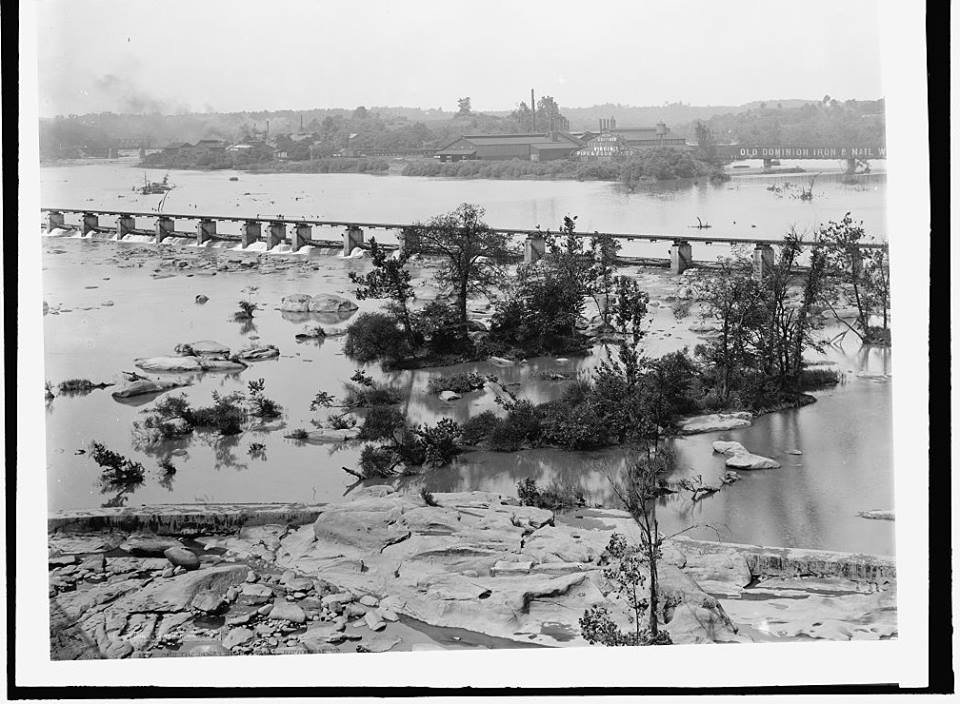
A long cherished dream to revisit Belle Isle, the place of my imprisonment during the late war, was realized during the 26th National Encampment in Washington. We took steamers down the Potomac and Chesapeake Bay to Norfolk (next line unreadable) known in war times as the Southside Railroad. From Richmond we crossed over one arm of the James to Belle Isle on a new bridge connecting the Tredegar Iron Works with the Old Dominion Nail Works, located on the Island.
The Tredegar Iron Works is where was rolled the heavy iron plating used for the armament of the Merrimac, as well as all the heavy ordnance for the Confederacy. This important industry was then, as now, the largest in the South. The solid shot and shell used by that defunct Government was made here. Those who were so unfortunate as to be prisoners of war on he Island will probably never forget how the Confederates would test their cannon and shell made at the Tredegar Works, by firing them over the prison stockade on the Island. Quite often the shell would burst, and the fragments would create consternation among the prisoners and graybacks. I suppose everything is fair in war.
As we stepped from the bridge to the Island a panorama of 28 years ago passed rapidly before us. We looked for the stockade, but it was gone; almost all traces have disappeared. A portion of the dead-line is quite visible at the northwest corner; the paraphet that was once about 13 inches high.
A map the writer made of the prison-pen some 10 years ago, exclusively from memory, was produced, and was as accurate as if made by a civil engineer, on the ground. We have always insisted the prison, after it was enlarged in the Fall of 1863, contained about two acres of ground. Now I know I was accurate in that statement. Where the prison-pen was located is now an immense rolling-mill owned and operated by the Old Dominion Nail and Iron Co. Where the writer lay in the sand with P. A. Davis and Rube Stypes, and where both died during that memorable Winter of 1863-’64, is now located a large Fairbanks scale for weighing ore.
Where the prisoners caught Serg’t Haight’s dog, and ate him in about 15 minutes, is now a large set of rolls, rolling out red-hot bar-iron. Where the hospital tent was located, beside which the dead were piled up to the number of 200 waiting burial, is now an immense bank of dead cinders from the rolling mills.
I walked down to the dead-line, where poor Jeff McCutchen was shot for getting too near that line. I picked a sprig of the National flower, the golden-rod, from as near the exact spot as I could locate it. I stepped upon the parapet, now not over 18 inches high, where the two little boys who belonged to the 13th Regulars would get with fife and drum and sound the grub call. What sweet music it was to the starving prisoners!
I walked to where the gate was located that led to the river for water and the sinks where we traded our last gutta-percha ring for a half dozen biscuits. At the same place I also traded the copy of the New Testament that was sent to me by the Christian Commission, in return getting one dozen biscuits. The physical man was perishing then, and not the spiritual. I walked up to the hill where was located the cannon that pointed its ugly nose down on the prisoners. The guards took especial delight in telling us they captured this gun at Bull Run. As I walked back towards the once stockade I met a green snake coming towards me. I did not argue the point, but began pounding Mr. Snake with my walking stick.
I was eager to conquer this enemy on the island, and as upon my first visit the serpent had me, but now the table was turned, and I thought of the many thousands of our fellow prisoners who had suffered here, and then I pounded Mr. Snake again. While Mr. Snake was probably not to blame for my mistreatment on the first visit, yet I readily seized upon the pretext of holding him responsible, and beat him until he was dead, dead, dead.
I walked down to the gate where 100 men were taken out every morning for Andersonville. I had always tried to get out before my turn, but was always detected; when Serg’t Haight would bring down his long club on my head, and send me back to starve awhile longer.
Mr. Baird, who was born on the Island, now the Superintendent of the Old Dominion Nail Works, was exceedingly kind and pleasant to me. He showed the large kettle that was used to boil the morning bean soup for the prisoners. It is now used to mix cement in to lay firebrick. This relic the National Prison Association should possess. I believe the Old Dominion Works would present it to that association gratis. Mr. Baird also showed us about 10 or 12 tons of the iron plate that formed the armament of the Merrimac. He had bought it for old iron. Several pieces showed dents in them three or four inches deep made by the solid shot from Ericsson’s Monitor. He has had several kegs of nails made from the same material, and took great pleasure in presenting our party with two each. We were also shown one wing of the nail works that was built by the prisoners, as good as the day it was put up, a splendid job of masonry. All prisoners (bricklayers) that worked on the building got double rations of corn-dodger, and glad to get the job.
Most of the prisoners who died on the Island (starved to death) are now buried in the National Cemetery about three miles east of the city; over 5,000 are unknown. This was the result of carelessness on the part of the Confederates. When a prisoner would die we would always give his name, company, and regiment to the Confederates, who would write it out on a piece of paper and pin or stick it in a buttonhole, or lay it on the body, but when as many as 200 at a time would lay out in the rain and snow for two weeks, before burial, nearly all the names would be blown away or lost. Hence so many unknown. Those that sleep there now the flag for which they died waves proudly over them.
“Rest on, embalmed and sainted dead,
Dear as the blood ye gave;
No impious footsteps here shall tread
The herbage of your grave,
Nor shall your glory be forgot,
While fame her record keeps,
Or honor points the hallowed spot
Where valor proudly sleeps.”
Our party each cut a sycamore cane from the sprouts that have grown up in the stockade, and walked off the Island with none to molest or make us afraid. – BRISCOE GOODHEART, Loudoun (Va.) Rangers, Knoxville, Tenn.
Was in Squad No. 34 on the Island.

Sunday Morning Accident

There was a bad accident Sunday morning shortly after 8 am at the corner of Idlewood and Belvidere.

2014-11-09 08.24.45

Paraphrased from a neighbor:

One of the officers on the scene said it was the result of a high speed chase with the suspect apprehended. The officer said the motorist had also struck a bicyclist further west of Oregon Hill. 3-4 cars were involved in the accident, with 2 people taken away in ambulances (the suspect presumably being one of them). There was also speculation from onlookers that the suspect was either mentally unstable or drugs were involved.

“Our River at Risk” On Wednesday

From Richmond.com article:

Many of us in Richmond watched the train tank cars burn as they rested precariously on the banks of the James in Lynchburg and could easily envision the same type of accident happening here in the capital city. What if a few of those highly flammable tanks dropped off the nearly three-miles long CSX Viaduct onto Brown’s Island during Friday Cheers or the Richmond Folk Festival?

(Editor’s note: see earlier posts on this subject by clicking here and here.)

The article continues:

For the next session of the General Assembly, the JRA will be pushing for stricter management and oversight and will be asking the public for support for the following issues:
-Rail transport of highly volatile Bakken crude oil from the Midwest. Crude oil by rail transport has increased 450 percent over the past five years. These trains are carrying over a million gallons of crude oil through our watershed two to five times per week. Governor McAuliffe convened a rail safety task force which will solicit input from industry stakeholders, local governments and members of the public and produce a report of recommended state and federal actions to prevent railroad accidents and ensure that Virginia is prepared as possible to keep communities safe in the case of a future incident.
-The James River watershed is home to coal ash ponds capable of holding 5 billion gallons of coal ash stretching from the headwaters to the mouth of the river. Despite being a highly toxic material, Virginia does not regulate coal ash as a solid or hazardous waste product and is not acting to stop contamination from coal ash ponds.
-The storage of the majority of chemicals in Virginia is not covered by any regulatory program. Review current industry practices and determine range of standards. Fill any gaps identified in the existing industry toxic storage policies and procedures with standards that ensure adequate safeguards and inspections for the storage of all chemicals.

According to a release, “We must learn from these events and take immediate action to protect public safety, the environment, the economy that the river supports and its recreational value. Our safety requirements and procedures need to be up to date to address current threats and to prevent a crippling event from happening in the future. Now is the time to begin the conversation on how to protect our waterways and our citizens from the threats posed by the storage and transport of hazardous materials.”
If you’d like to have your voice heard, join the forum Wednesday, Nov. 12, from 6-7:30 p.m. at the Virginia War Memorial. Your James River needs you.

L’Opossom Review In Style

Style magazine recently published a review of L’Opossum restaurant:

Character seems to work for Oregon Hill, and the kitschy-baroque décor includes — but isn’t limited to — deep-red walls lined with “Star Wars”-themed decorative plates and a gallery of thrift-store art, shaggy latch-hook pillows, bejeweled pendant lighting and a clown bathroom you must experience for yourself. There’s tension between all this stuff, and while it seems that it shouldn’t work together, it kind of does.

Part of the menu works this mishmash theme, and you can tell that chef David Shannon had a grand old time coming up with his eclectic spread, plates and spirits. You’ll need help figuring out what some of the long-winded items are, such as the Chapel Creek oysters rock in a green fairy fog of absinthe mist ($10). This isn’t a ding. Let it be known that I love all wordplay, and it was a blast to read and decipher the menu — with assistance from the staff. It’s a wonderful bunch, pros who swoop in greeting, welcoming, directing and guiding.

There’s a lot to love about L’Opossom: It’s creative, it’s fun, and it’s a welcome respite from newer, design-oriented restaurants that often feel too precious. It has a strong, bold base from which to work. And if the French-style adage of less is more were applied here and there, it could achieve that magical balance of tastiness and consistency. It could be a contender as the other Oregon Hill destination.