February 1, 2012
Honorable Dwight C. Jones Office of the Mayor
900 East Broad Street, Suite 201 Richmond, Virginia 23219
Re: Opposition to Proposed 2nd Street Connector
The Sierra Club Falls of the James group would like to express our many concerns regarding the recent proposed riverfront development just west of downtown. In particular, we see several issues with the proposed “2nd Street connector road.”
Lack of Amenities for Bicyclists and Pedestrians
First, we share the concerns expressed by neighborhood and bicycle groups about the lack of bicycle lanes and pedestrian features in plans for this development. It is absolutely hypocritical for the City to declare itself “bicycle-friendly” while creating a new roadway in its downtown riverfront without these measures. This sends all the wrong signals as the 2015 World Road Cycling Championship approaches.
Disrespect for Historic Context
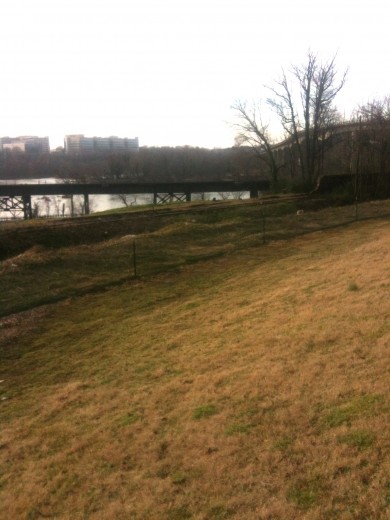
Secondly, we are very interested in protecting the historic features of the Kanawah Canal that this proposed roadway will bisect. The canal, listed on the National Register of Historic Places, is of great historical significance to the City of Richmond. It was first development of the city. Samuel Pleasants Parsons, a noted abolitionist, whose home (built in 1819) survives at 601 Spring Street, was the Superintendent of the Canal in 1840 when the Canal was expanded westward to Lynchburg. From about 1850 to 1875, John Messler ran a canal boat building enterprise in the Penitentiary Basin. Messler had a short walk from his home the Jacob House (which survives at 619 W. Cary Street) to the canal basin. Based on these facts alone, we believe that any construction in the area should be preceded by careful archeological investigation. All of the historic images of Richmond’s Kanawha Canal emphasize how important this area is to the City’s identity, and it deserves better than the typical corporate campus driveway treatment.
Environmental Degradation and Canal Boat Impasse
Thirdly, in addition to the history of the canal, its natural aspects also bring up important environmental concerns. Putting a paved road over the canal and so close to the river will have a significant effect on stormwater runoff in the area. With the James River Park so close by, any development of this area will have an adverse effect on the environment. We understand that the land above the canal area is ready for development, but the canal area itself is not. While much of the land for this proposed road may be on private property now, for the City to accept its donation under these circumstances is not proper environmental stewardship.
Moreover, we are listening to Jack Pearsall, who has served with the Historic Richmond Foundation and City planning committees and who has championed the canal as a transportation alternative. He has raised red flags with regard to how this proposed road will meet the historic canal. He has estimated that the culvert would be about 12 feet high with only about 6 feet of clearance if water flow were restored. That means typical canal boats would not be able to pass.
In a recent Richmond Times Dispatch article, Mr. Pearsall was quoted as saying, “The purpose of the canal is to float boats. If we’re going to float boats on this canal, they’ve got to be able to pass this constriction.”
Disregard for Possible Alternative Future Uses
We also note public support for this restored canal concept. There was support for it twenty years ago, and support for it was again expressed at the recent public riverfront planning meetings. Planning for the canal might be a question of whether the chicken or the egg comes first. At first the canal might be seem to be mostly for tourist boats up to Maymont and an extension of the history tour on the canal downstream; but some day the larger culture may see the benefit of and begin to use “water taxi” for transporting commuters downtown or to the slip, and eventually it may be functionally necessary again for commercial forms of traffic moving up the river. Navigable water is wisely being mapped with an eye on the future value to the state and municipalities as real estate. The movement to open and protect blue-ways is focused especially on keeping a cap on the scale of expansion or commercialization. Re-opening the canal must also be designed within the context of supporting conservation easements to prevent sale of any segments of James River Park.
We might say to ourselves that that little canal would have to be expanded to carry significant traffic once again, yet we must also look at the canal as it is: an existing option that we protect with foresight now while we have the chance, in preparation for the time it might need to be pressed into service because of a lack of resources for the kinds of massive infrastructure projects that we in our time are temporarily fortunate enough to consider ordinary.
Exacerbated Traffic Problems
Finally, we share concerns expressed by neighborhood groups with regard to traffic and further riverfront development. We recall our opposition, along with that of over a dozen other neighborhood and environmental groups, to Dominion Power’s Special Use Permit for its headquarters building on the riverfront. At the time, traffic was brought up as a chief concern, and Dominion assured City Council that existing roadways could serve the additional traffic created by its development. Now ten years later, Dominion is insisting on this new road while at the same time saying it has no plans for new development “at this time.” Oregon Hill neighborhood residents have made it clear there already are problems with additional traffic coming from the 195 expressway onto Idlewood Avenue that would be exacerbated by the 2nd Street connector. The City Department of Planning has not delineated the necessity of this road for emergency access.
In summary, the Sierra Club Falls of the James Group does not see the purpose of this road, and more pointedly, we are opposed to its current planning for the reasons set out above. We are not totally opposed to development in the area, but what has been suggested so far in regard to the Kanawha Canal and the 2nd Street Connector is not acceptable. We welcome the opportunity to discuss this matter with you.
Sincerely,
Adele MacLean, Co-Chair
Cc: City Council, Planning Commission