VCU, You did not build the city of Richmond

I was glad to see this editorial in VCU’s student newspaper, the Commonwealth Times, in response to some t-shirt sloganeering.

Excerpt:

Although it might be frustrating and difficult to accept, you didn’t build that. Aside from the inhuman toil that created this country’s structural foundation, a myriad of factors built this city, including but not limited to taxpayer money, honest labor, legislation, committees, grassroots organizations and petitions.

It would behoove certain members of our community to educate themselves on the history of Richmond before asserting VCU’s dominance in the role of the construction of the city, whether the comment is meant metaphorically or otherwise. The city is a separate entity from VCU, and without Richmond, there would be no VCU. The fraudulent claim that “we built this city” downplays the city as a municipality and implies that Richmond is lucky to have us, when, indeed, it is we who are fortunate to have Richmond, a city underpinned by a shameful history, but working toward righting past wrongs and progressing itself into a thriving, truly diverse community.

Brown’s Island dam walk to be named for Potterfield

Since our neighbor’s sudden, unexpected death this past April, people have found different ways to memorialize Tyler Potterfield. Now it looks like one of the more popular ideas is coming to fruition.

From Times Dispatch article:

The Richmond City Council is poised to officially name the upcoming Brown’s Island Dam Walk the “T. Tyler Potterfield Memorial Bridge” in honor of the late city planner who championed the project.
All nine council members have signed off on an ordinance to name the bridge for Potterfield, who died this year at age 55. Potterfield, who wrote a book on the Richmond landscape, worked for the city since 1991.

The ordinance the council intends to pass states: “One of the crowning achievements of Mr. Potterfield’s career culminated in the design of a historic dam structure as a bridge for pedestrians and bicycles extending from Brown’s Island to Manchester, connecting the north and south banks of the James River.”

The ordinance is scheduled to come up for official passage on Oct. 13. The bridge is expected to be finished in about a year.

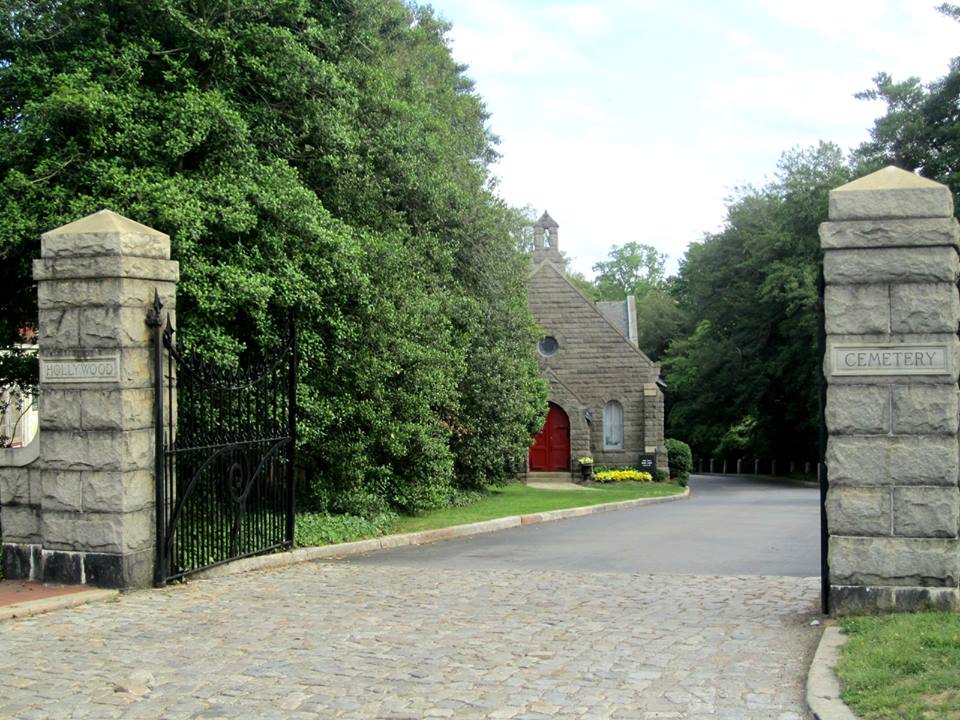
Driving Through Hollywood

From Hollywood Cemetery’s FaceBook page:

Although you can drive through the cemetery today, there was a time when automobiles were prohibited in Hollywood Cemetery. In fact, when President Taft visited in 1909 he was initially refused entry because of his motorcade.

10626569_10152388944797406_1215892220478345167_n

Also:

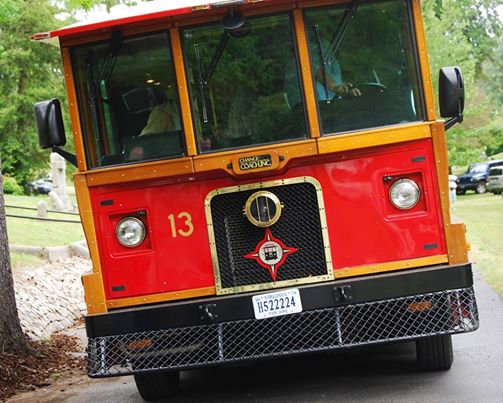
Another fun way to tour Hollywood is by trolley! Our trolley tours take place every Sunday at 2pm and last approximately 2 hours.

10687079_10152379405162406_2772468302947352066_n

Trash/Recycling Pickup Tomorrow

This Wednesday is a red Wednesday, which means trash and recycling pickup. Please make sure you pick up containers after pickup tomorrow night. They do not belong on the sidewalk after tomorrow night.

In order to take your recycling to the next level, read this: 10 ways to improve your recycling.

Plastics, cans, glass– how about cardboard?

According to this website:

One ton of recycled cardboard saves:
390 kWh hours of electricity.
46 gallons of oil.
6.6 million Btu’s of energy.
9 cubic yards of landfill space.
Cardboard and paper waste make up 41% of the municipal solid waste stream.
Recycling cardboard takes 24% less energy and produces 50% less sulfur dioxide than making cardboard from raw materials.

Makes you wonder what our neighbor Mead Westvaco is up to….

The Free Richmond Instrument Lending Library

From the GirlsRockRVA website:

frill2-1-672x372

The Free Richmond Instrument Lending Library (FRILL) is launching this Saturday at the Main Branch of the Richmond Public Library – 101 East Franklin Street – from noon-3pm.

Richmond youth ages 8-18 can check out instruments from the Girls Rock! collection for free – guitars, basses, keyboards, drumkits, and amplifiers – plus pick up instructional materials, learn how to set up the instrument at home, and check out the library’s holdings of sheet music and music instruction materials. You can have each item for a two-week period, with the option to renew for an additional two weeks. Instrument returns must take place during FRILL hours of operation, every other Saturday from noon-3pm at Richmond Public Library’s Main Branch.

What you need to bring: A Richmond Public Library card, and a parent or guardian if you are under 18, to sign the FRILL release form. Consider how you will transport items home, as some of them are big and heavy!

Our supplies are limited and will be distributed on a first-come, first-served basis. We hope to see you there early! Check out the flyer below to learn about the awesome People’s Library event happening at the same time as our FRILL launch – we are having a shared reception at 3 pm!

Byrd House Market in the Times Dispatch

Today’s Richmond Times Dispatch newspaper had an article about the Byrd House Market. Excerpt:

The here was the weekly Byrd House Market, a fresh-food bonanza sponsored every Tuesday, May through October, by the William Byrd Community House.
For decades, the nonprofit organization has provided educational, development and nutritional programs for kids in the city.
It has a library, runs after-school programs and summer camps, hosts dinners — often featuring food grown on site — and generally makes itself available to meet the needs of its community.
Since about 2007, the organization has run the farmers market on the yard that spreads out behind its building on Cherry Street.
About two dozen vendors set up each week, offering a wide variety of locally grown fruits and vegetables, meat, flowers and prepared foods. Earlier in the season, some vendors also were selling locally grown plants.
In keeping with the Byrd mission of trying to uplift its community, the market was the first in the area to accept food stamps.
“We’ve always tried to promote better, healthier lifestyles, and this really fit into that,” said Peggy Friedenberg, who was chair of the Byrd board when the market started.
Friedenberg also said the market is a novelty among the many of its kind in the area: “We’re the only one on grass,” she said.
Hicks, who sets up as Amy’s Garden, said she has been coming six years now for one reason.
“Community,” she said. “There’s good support here.”
Ana Edwards, the manager of the Byrd House Market, looked around the small lot, tucked in along Idlewood Avenue between the Downtown Expressway and Hollywood Cemetery, and said the location was what made the market what it has become.

RVA Sparks Award Deadline Is Next Monday

Something more positive:

RVA Sparks Award deadline: Monday, Sept. 22
Are you a young person that sees something in your world that you want to improve? Do you have a new idea for how to make a positive impact in your community? The Spark RVA Awards is here to inspire creative thinkers to use innovation for social good. The Spark RVA Awards expects to make up to ten (10) awards over two funding cycles in 2014. The minimum award is $1,000 and the maximum award is $10,000. Award recipients agree to share what they learn with The Community Foundation and with others to help inspire further innovation and community change. The Community Foundation will profile the award recipients on its website and in a variety of other venues. In 2014, the Spark RVA Awards will focus on youth engagement and leadership to improve the lives of people in the community. The program will be piloted in metro Richmond in partnership with youth serving organizations, schools (public or private), faith communities, and/or locally operated businesses. For more information about the award and application process, visit http://tinyurl.com/SparkRVA

Street Center Remembered

From Josephine Ensign’s blog, “Medical Margins”:
street-center-b-w-copy

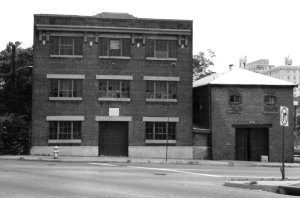
The Street Center was thick-walled and cavernous. It was located in the armpit of town, on the border between Monroe Ward, Gamble’s Hill, and Oregon Hill near the James River. Built on land that had been the old city dump, the building had been a gas meter repair shop for the city as well as a storage unit for abandoned bicycles. The city donated the building as a way to appease the downtown merchants who wanted to get the street people—the visible homeless—away from their struggling businesses. Kudzu vines draped over trees and telephone polls; they formed a convenient curtain to block the public’s view of the ugly, forbidding looking building.

The Street Center was located at the corner of Belvidere and Canal Streets, with the main entrance on Canal. The building was flush with the narrow sidewalk. Belvidere Street, a busy four lane divided highway that ran north to south, was part of US Route 301 extending down to Sarasota, Florida, and up to Delaware. Across Belvidere from the Street Center was a 7-11 that sold cigarettes, cheap beer and flavored wine like Boone’s Farm and Thunderbird, all popular with the Street Center clientele. South of the Street Center were the hulking brick buildings of the Virginia Penitentiary, and just to the west was Hollywood Cemetery where a relative of mine—Jefferson Davis—and 20,000 confederate soldiers lay buried. In the block north of our building was a Hostess Twinkie factory. The sweet buttery smell of the factory mingled with the acrid smells of the Street Center: damp oil-stained concrete, souring unwashed bodies, old urine, and cigarette smoke.

When the Street Center opened in April 1986, homelessness was getting extensive national and local attention, with almost daily newspaper and TV news coverage. In May of that year, USA for Africa teamed up with Coca-Cola to sponsor Hands Across America to raise money for “fighting hunger and homelessness.” They had thousands of people hold hands for 15 minutes in cities across the nation. President Reagan joined in the hand holding from the White House, reportedly shamed into doing it by his daughter. There was a sense that homelessness—at least this new version of homelessness—could be cured.