Sierra Club Speaks Against Proposed 2nd Street Connector

The letter:

February 1, 2012
Honorable Dwight C. Jones Office of the Mayor
900 East Broad Street, Suite 201 Richmond, Virginia 23219
Re: Opposition to Proposed 2nd Street Connector

The Sierra Club Falls of the James group would like to express our many concerns regarding the recent proposed riverfront development just west of downtown. In particular, we see several issues with the proposed “2nd Street connector road.”

Lack of Amenities for Bicyclists and Pedestrians
First, we share the concerns expressed by neighborhood and bicycle groups about the lack of bicycle lanes and pedestrian features in plans for this development. It is absolutely hypocritical for the City to declare itself “bicycle-friendly” while creating a new roadway in its downtown riverfront without these measures. This sends all the wrong signals as the 2015 World Road Cycling Championship approaches.

Disrespect for Historic Context
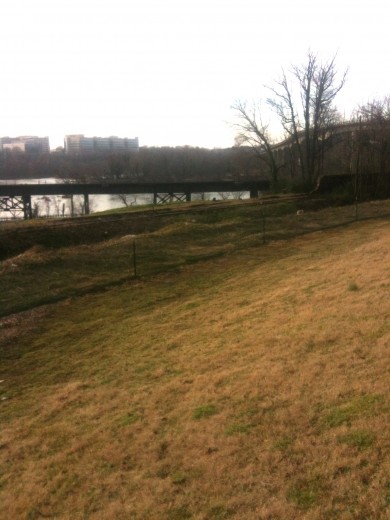
Secondly, we are very interested in protecting the historic features of the Kanawah Canal that this proposed roadway will bisect. The canal, listed on the National Register of Historic Places, is of great historical significance to the City of Richmond. It was first development of the city. Samuel Pleasants Parsons, a noted abolitionist, whose home (built in 1819) survives at 601 Spring Street, was the Superintendent of the Canal in 1840 when the Canal was expanded westward to Lynchburg. From about 1850 to 1875, John Messler ran a canal boat building enterprise in the Penitentiary Basin. Messler had a short walk from his home the Jacob House (which survives at 619 W. Cary Street) to the canal basin. Based on these facts alone, we believe that any construction in the area should be preceded by careful archeological investigation. All of the historic images of Richmond’s Kanawha Canal emphasize how important this area is to the City’s identity, and it deserves better than the typical corporate campus driveway treatment.

Environmental Degradation and Canal Boat Impasse
Thirdly, in addition to the history of the canal, its natural aspects also bring up important environmental concerns. Putting a paved road over the canal and so close to the river will have a significant effect on stormwater runoff in the area. With the James River Park so close by, any development of this area will have an adverse effect on the environment. We understand that the land above the canal area is ready for development, but the canal area itself is not. While much of the land for this proposed road may be on private property now, for the City to accept its donation under these circumstances is not proper environmental stewardship.
Moreover, we are listening to Jack Pearsall, who has served with the Historic Richmond Foundation and City planning committees and who has championed the canal as a transportation alternative. He has raised red flags with regard to how this proposed road will meet the historic canal. He has estimated that the culvert would be about 12 feet high with only about 6 feet of clearance if water flow were restored. That means typical canal boats would not be able to pass.
In a recent Richmond Times Dispatch article, Mr. Pearsall was quoted as saying, “The purpose of the canal is to float boats. If we’re going to float boats on this canal, they’ve got to be able to pass this constriction.”

Disregard for Possible Alternative Future Uses
We also note public support for this restored canal concept. There was support for it twenty years ago, and support for it was again expressed at the recent public riverfront planning meetings. Planning for the canal might be a question of whether the chicken or the egg comes first. At first the canal might be seem to be mostly for tourist boats up to Maymont and an extension of the history tour on the canal downstream; but some day the larger culture may see the benefit of and begin to use “water taxi” for transporting commuters downtown or to the slip, and eventually it may be functionally necessary again for commercial forms of traffic moving up the river. Navigable water is wisely being mapped with an eye on the future value to the state and municipalities as real estate. The movement to open and protect blue-ways is focused especially on keeping a cap on the scale of expansion or commercialization. Re-opening the canal must also be designed within the context of supporting conservation easements to prevent sale of any segments of James River Park.
We might say to ourselves that that little canal would have to be expanded to carry significant traffic once again, yet we must also look at the canal as it is: an existing option that we protect with foresight now while we have the chance, in preparation for the time it might need to be pressed into service because of a lack of resources for the kinds of massive infrastructure projects that we in our time are temporarily fortunate enough to consider ordinary.

Exacerbated Traffic Problems
Finally, we share concerns expressed by neighborhood groups with regard to traffic and further riverfront development. We recall our opposition, along with that of over a dozen other neighborhood and environmental groups, to Dominion Power’s Special Use Permit for its headquarters building on the riverfront. At the time, traffic was brought up as a chief concern, and Dominion assured City Council that existing roadways could serve the additional traffic created by its development. Now ten years later, Dominion is insisting on this new road while at the same time saying it has no plans for new development “at this time.” Oregon Hill neighborhood residents have made it clear there already are problems with additional traffic coming from the 195 expressway onto Idlewood Avenue that would be exacerbated by the 2nd Street connector. The City Department of Planning has not delineated the necessity of this road for emergency access.
In summary, the Sierra Club Falls of the James Group does not see the purpose of this road, and more pointedly, we are opposed to its current planning for the reasons set out above. We are not totally opposed to development in the area, but what has been suggested so far in regard to the Kanawha Canal and the 2nd Street Connector is not acceptable. We welcome the opportunity to discuss this matter with you.

Sincerely,
Adele MacLean, Co-Chair

Cc: City Council, Planning Commission
Generation Dream Performance At Main Street Library Friday

From Richmond Peace Education Center:

Youth EduConcert honoring the life and legacy of Dr. Martin Luther King, Jr.
Friday, February 3, 7 p.m., Richmond Public Library, 101E. Franklin–FREE!
Saturday, February 4, 2 p.m., Science Museum of VA, 2500 W. Broad St.–Free with Museum Admission
View a video clip from 2010
Download a Flier

This Council Race Is On.

At last week’s Oregon Hill Neighborhood Association meeting, David Gammino announced he was challenging Marty Jewell for his 5th District Council seat.

The Times Dispatch is now reporting that Jewell has failed to account for his fundraising.

From the article:

While he said he doesn’t plan to make it an issue, Gammino said Jewell’s “inability to file election campaign disclosures and reports speaks to his organizational skills or lack thereof, and his transparency, or lack thereof.”

Gammino said he has been working to build relationships in the district’s South Side precincts, where a challenge by Woodland Heights civic leader Lee Shewmake split the vote in a three-way race with Jewell and Randolph neighborhood businessman Mark Brandon.

Climate Reality Project Visits VCU On Wednesday, Green Scare On Thursday, RVA EFF This Weekend

This Wednesday at 8 pm at the VCU Commons Theater, VCU’s Green Unity will have its second meeting of the semester. It will feature a presentation about climate crisis (70 degrees in February, folks!) from the Climate Reality Project. Click here for the Facebok event page.

Then, Thursday night, the Richmond Anarchist Black Cross is hosting an event at the Flying Brick Library. Click here for the Facebook event page.

This presentation will discuss the current and ongoing repression of environmental/animal rights activists and liberators by efforts of U.S. government agencies and private sector groups; in particular the “terrorist”/”eco-terrorist” designation.
We will examine the history, goals and tactics of earth/animal defense groups, and focus more intensely on the increasing legislative/legal backlash – what has become punishable or consequential, how that has developed, and what those consequences are – and what this means for these folks as well as the broader spectrum of activists.

This may or may not be a good precursor to the RVA Environmental Festival, which is happening this weekend at the Byrd Theater, hosted by the Falls of the James group of the Sierra Club and the James River Film Society.

Historic Tredegar To Expand To Remind People Of The Civil War

Excerpt from Times Dispatch article:

Richmond’s fiery last days of the Civil War will immerse visitors in a new interactive version of history at the American Civil War Center when an $8 million fundraising campaign is complete.

The campaign announced today has already secured pledges of $6.3 million from board members and riverfront neighbors of the center at Historic Tredegar.

A total of $4 million in contributions will come from NewMarket Corp. and Bruce C. Gottwald, chairman of both the Tredegar board and NewMarket’s executive committee.

MeadWestvaco has made a $500,000 commitment.

The most obvious change to the museum property will be a $3 million building connecting the current exhibition space with administrative offices.

A 100-seat theater within the new building will present a $1.2 million production tentatively called “Richmond on Fire,” said Christy S. Coleman, president of the Civil War center. The 12- to 15-minute immersive experience, “where scholarship meets showmanship,” will involve all the senses, she said.

“It will tell the story of those harrowing days at the end of the war (when the waterfront was set on fire by departing Confederates) with the purpose of exploring how the nation got to this point. We want the visitor to … have a greater emotional connection when they go into the exhibits.”

A $450,000 working model of Tredegar Ironworks in 1865 will be built in an area where the Richmond Folk Festival has children’s activities. Other improvements in interpretation at the center will include $300,000 in exhibit upgrades and $200,000 for outdoor interpretation through mobile devices.

In partnership with the National Park Service and the Richmond Metropolitan Convention and Visitors Bureau, the campaign also will provide $350,000 to create a Gateway Orientation Center in the Pattern Building.

One of the smile-producing additions will be a cannon made from the same mold that Tredegar used, said board member S. Buford Scott.

“We are hoping to fire this cannon at noon every day and remind Richmond we are the gateway of the Civil War and a place to visit,” Scott said.

Gottwald, in an announcement of the campaign, said people need to remember that Richmond was the focal point of a war that cost 625,000 American lives. “A substantial part of this disaster occurred right here, right within earshot of our city.

Hollywood < > Hollywood Sci Fi Fantasy

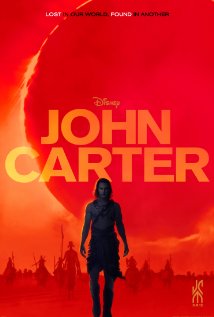
I meant to post this earlier- Richmond Magazine writer Harry Kollatz Jr. explaining how Pixar’s latest connects to a Richmond cemetery mausoleum, or how the American Civil War met Mars, or how…well, here’s an excerpt (but you should really just *click here* to read his entire post on John Carter craziness):

In Burroughs’ telling, a telegram of March 4, 1886, summoned him to the Hudson River cottage of his uncle, Capt. John Carter, in New York state. But Burroughs learned that Carter, the direct descendant of Robert “King” Carter (1663-1732) of Shirley Plantation and a Confederate cavalry officer, had died that morning. Burroughs discovered in the cottage’s safe his uncle’s will, a hefty manuscript and detailed burial instructions. In accordance with these, Burroughs writes, he removed the body to the “strange mausoleum in the old cemetery at Richmond.”

Among Richmond’s “old” graveyards were Shockoe Hill at Hospital and Second streets, opened in 1822, and Hollywood, laid out in 1848. Hollywood is the likely candidate for a “strange mausoleum.” (And the name is prophetic, considering that John Carter has finally gone Hollywood.)

The burial directions included that Carter be laid in an open casket and that “the ponderous mechanism which controlled the bolts of the vault’s huge door be accessible only from the inside,” as Burroughs wrote in 1918.

(My guess is that none of these details are in the film; maybe if it had been adapted by a cable network and shot like a Merchant-Ivory production or the 1984 release Greystoke: The Legend of Tarzan of the Apes.)

Weirder than Carter’s elaborate last wishes, though, were the papers he’d entrusted to Burroughs. The narrative within described 10 years of adventuring on Barsoom — otherwise known as Mars — fighting for and against four-armed green men and, after numerous battles, marrying “the ever beautiful Dejah Thoris, Princess of Helium,” not to mention becoming the great friend of Barsoomian warrior Tars Tarkas. Carter became a prince of the house of Tardos Mors and jeddak (emperor) of Helium on Barsoom.

Burroughs, a failure in almost every pursuit, began submitting “edited portions” of Carter’s writings as serialized fictionalized shorts in pulp magazines in 1912. These stories accumulated into 11 books published between 1917 and 1964.

Cue the movie trailer: