Photo courtesy of Wendy McSnarlin.


Photo courtesy of Wendy McSnarlin.
The monthly 4th Precinct MPACT (Mayor’s Participation, Action & Communication Team) meeting is scheduled for Thursday, March 17, 2016 at 6:00 p.m. The meeting will be held in the library of Linwood Holton Elementary School (1600 West Laburnum Avenue).
From email announcement:
This month we invite you to attend a MPACT conversation with special guest speakers, Sector 412 Lieutenant Keyshawn Manns and 4th Precinct Personnel. Officer Paul Lewis, Richmond Police Department, will discuss the Neighborhood Watch Program. Sarah Henrikson, with the Department of Public Utilities will discuss the Wastewater Division, Pretreatment Department. Join us at this meeting to hear from your neighbors, share your ideas, and identify solutions we can implement together to build a better Richmond!
This Wednesday is a red Wednesday, which means trash and recycling pickup.
Ideally, rolling recycling containers are stored and deployed in the back alleys along with trash cans. Please make sure you pick up containers after pickup tomorrow night.
If you have not done so already, don’t forget to sign up for your Recycling Perks.
In order to take your recycling to the next level, read this: 10 ways to improve your recycling.
From City press release:
Public Meeting to Detail Main and Franklin Streets
Separated Bike Lane Project
~Community meeting scheduled to obtain resident input ~Richmond, VA – The initial design details for the proposed Separated Bike Lane Project, also known as a Cycle Track, will be available at a public informational meeting next week. The bike lanes start at Ninth Street on both Main and Franklin streets and end at Laurel Street. A separated bike lane is a path with the on-street infrastructure of a conventional bike lane however, it is physically separated from motor traffic and distinct from the sidewalk.
The meeting to review the plans will be on Wednesday, March 16 at 5:30 p.m. at the Richmond Main Library, 101 East Franklin Street. Residents are invited to attend this meeting to learn more about the project, the roadway analysis and to review the designs as well as provide feedback and recommendations.
The City’s Department of Public Works and Department of Planning and Development Review will be joined by VHB, the consultant, to address questions and concerns during the community meeting.
This project was first proposed in the Strategic Multimodal Transportation Plan known as Richmond Connects and it was also included in the Bike Master Plan. Federal funds will cover 80% of the project’s $300,000 cost with the city providing $60,000 in funding.
Once completed, this cycle track will provide a continuous east/west route along with a connection to the Floyd Avenue Bike Boulevard.
For more information on City services, please visit www.RichmondGov.com.
###
Not to be left out, Dinamo also made Style magazine’s State of the Plate with two of its dishes:
Close your eyes and you can almost pretend that you’re seaside when eating a bowl of fish soup loaded with mussels, rockfish and calamari, all tasting so fresh that you can practically smell the salty air. Pasta and tiny, diced carrots and onions round out the flavor profile, which comes across as a satisfyingly rustic and thoroughly pleasing start to a meal.
—
It feels weird to be talking about a salad, but this salad does so many things right. Seriously. I don’t even like beets, particularly, and I’ve tried to recreate it at home at least three times. It’s all in the dressing — zippy, sweet and tangy.
From RAIDSonline.com:
HIT AND RUN
8XX HOLLY ST
Mar 9, 2016 at 2:30 pm
Data provided by Richmond Police DepartmentDRUNKENNESS
1XX S BELVIDERE ST
Mar 9, 2016 at 10:11 pm
Data provided by Richmond Police DepartmentLIQUOR LAW VIOLATIONS
X BELLE ISLE
Mar 10, 2016 at 1:30 pm
Data provided by Richmond Police DepartmentLIQUOR LAW VIOLATIONS
X BELLE ISLE
Mar 10, 2016 at 2:24 pm
Data provided by Richmond Police DepartmentDESTRUCTION PROPERTY/PRIVATE PROPERTY
3XX N LAUREL ST
Mar 10, 2016 at 2:45 pm
Data provided by Richmond Police Department
In addition to L’Opossum, Style Magazine’s State of the Plate 2016 also showed some love to 821 Cafe.
For me, my favorite neighborhood unsung hero is 821 Café, where the vibe is lively, the food is solid and no matter the day, I can get breakfast, lunch or dinner with a smile, a reasonable price and a killer soundtrack. 821caferva.com.
From a neighbor:
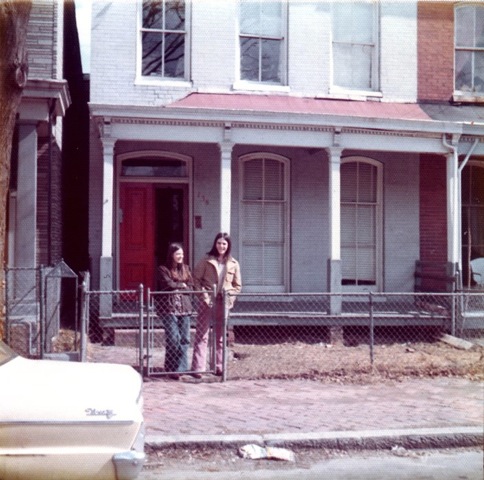
my friend Mike Garrett and wife in 1972 in part of Oregon Hill that was obliterated by VCU.
“Shannon’s sense of humor can’t undermine his profoundly serious approach to food. A graduate of the New England Culinary Institute, former Inn at Little Washington sous chef, the man who brought the grilled Caesar salad to Richmond in the early 2000s at his old restaurant, Dogwood Grille & Spirits, Shannon recently was named a semifinalist as 2016 Best Chef Mid-Atlantic by the James Beard Foundation.
It’s a good time to mention that exactly a decade ago, Style’s team of food writers and restaurant reviewers named Shannon’s Dogwood Grill & Spirits as our first Restaurant of the Year. They cited it as the city’s ideal dining experience, with warm service and charm, a restaurant that took risks that were balanced with a very-Richmond tone and restraint.
Shannon’s success is clearly no one-hit wonder. And the rest of the country has noticed. “L’Opossum has garnered the national spotlight as well, with recommendations from Condé Nast Traveler and Southern Living magazines,” reviewer Matthew Freeman notes. “Altogether the creativity and quality contribute to the growing prominence of the food scene in our city.”
From RAIDSonline.com:
FALSE INFORMATION TO POLICE
6XX S BELVIDERE ST
Mar 6, 2016 at 4:50 pm
Data provided by Richmond Police Department