City And State Officials Announce New Data Center Support Program

Photo by Zulfugar Karimov: https://www.pexels.com/photo/modern-chrome-kitchen-faucet-with-running-water-34295401/

Despite growing controversy, including a Goochland County lawsuit, City and state officials have indicated they will move ahead with an exciting, new, local utility program to support area new date center projects.

The DPU program is called ‘Richmond’s Next Step’ and it is already being touted as a ground breaking way to push area technological advancement and development through public/private partnership. ‘Richmond’s Next Step’, if successful, will be seen as a model for utilities around the state, and scale up to become ‘Virginia’s Next Step’. Corporate and government leaders are saying this is absolutely necessary to further the use of artificial intelligence in Virginia and be able to compete on an economic basis both nationally and internationally.

Although finer details are being worked out when the state’s General Assembly reconvenes later this month, these are the four major parts we know so far for ‘Richmond’s Next Step’:

1) City residents will see a new surcharge of around $11 on their monthly water utility bills, and the state government will contribute matching funds for the monies collected from the surcharge. This will in turn create a large resource to help with the following…

2) A portion of the proceeds will go towards implementing new infrastructure for needed energy and water for new data centers in state. Dominion Power will oversee this with an offshoot, subsidiary company, much of the same way it manages sewer connection insurance for City residents. This will insure smooth integration for both Virginia residents and industry.

3) A portion of the proceeds will go towards the decades-long project to ameliorate the City’s (CSO) sewer overflow problems. while CSO programs have made some progress, the City continues to beg for state and federal help with this. Many state leaders have asked for more control and oversight of money given to the City for this purpose. The new ‘Richmond’s Nest Step’ program will hopefully address these concerns and enable more state and federal funding.

4) In what is probably the most elaborate and high tech portion of ‘Richmond’s Next Step’, the City utility will roll out new toilet sensors for both private and public institutions, with commercial and residential places to follow. These sensors are based on the highway ‘EZ Pass’ toll collection service, and will be able to collect both tolls and data on toilet usage. Money collected from the tolls will be funneled back into the overall program and utility modernization efforts.

Mayor Danny Avula has enthusiastically embraced the measure, saying that this will finally address many of the outstanding matters with the Department of Public Utilities, while making sure that the City continues to support economic development for its corporate partners. He also said it would be contribute to the City’s commitment to ‘financial transparency’.

The Mayor, who has already had an extensive career in public health, including stints with both the City’s and the state’s health departments’ response to the Covid-19 epidemic, is particularly excited about the data collection from the ‘EZ-Pass’ toilet data collection. He noted how recent science has proven that studying COVID-19 through wastewater surveillance works because infected individuals shed the virus in their stool, which then enters sewage systems, often days before clinical symptoms appear. “Richmond should embrace this opportunity to learn more about its citizens and use data to create more robust emergency health responses and outcomes”, he beamed.

Longtime, reform-minded critics of the City’s water utility are not impressed.

Laurel Street neighbor Charles Pool, for example, was especially dour.
“The City’s PUBLIC water utility has been used as a cash cow with its regressive rates, it has essentially supported suburban sprawl in the counties by selling the counties water for less then it has charged it’s own poorest citizens, it has given large volume users incredible price breaks, and now they want City residents, their rank and file customers (who really own the utility), to directly subsidize the development of private data centers in other parts of the state? Intolerable!”

Another Spring Street neighbor expressed his frustration.
“All across the City, we have leaking water mains and outrageously high and erroneous bills that are stressing out working Joes like me, and the politicians tell us that we need to suck it all up for more dubious ‘economic development plans? Is AI going to help me figure out how to keep food on my family’s table? And now they want to track how much we poop!?”

Others harkened back to a public letter to former Governor Northam, prior to the January 2025 Richmond water crisis, and wondered if the City will ever address water rate reform.

Virginia’s State Corporation Commission, ‘the state’s watchdog’, has been strangely silent about the ‘Next Step’ plan, and it’s involvement in the plan’s formation. But water and energy conservation groups as well as privacy advocates are urging citizens to speak up to their elected representatives.

A Dominion representative restated that there is no evidence that residential customers are competing for energy with data centers (but did not mention water usage in his remarks).

Data center bills dominated this year’s General Assembly, but many government watchers are wondering if the full details for this ‘Next Step’ plan (and what else?) will fully emerge from the upcoming special budget session.

Beat The Heat

Many people are trying to avoid looking at the big climate change picture, which is absolutely terrifying.

More immediately, in the smaller picture, Virginia is expected to experience a ‘heat dome’ effect this coming week, with increased humidity and temperatures in the upper 90’s.

If you do plan to work outside, make sure you stay extra hydrated and wear the proper attire to avoid any heat-related accidents. Hot weather can increase the risk of heat stroke or a heat-related incident.

People with means will find ways to beat the heat for now – https://hottub.com/cold-tubs/

Yet there are more modest methods to prepare residences.

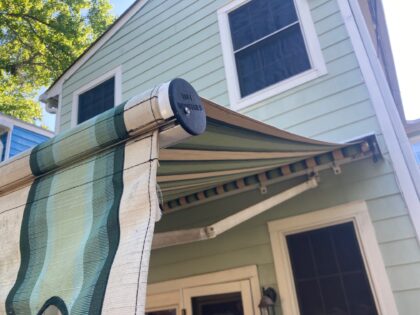
A study in the U.S. found that across 50 cities, awnings could save up to $200 annually in energy costs per household. Installing awnings above south-facing windows can reduce heat gain by 65%. On east and west-facing windows, awnings can reduce heat gain by up to 77%.

Shade cloth can lower cooling costs by reducing the amount of heat that enters a building. This can be done outside of the building or along the windows, as long as the sunlight is blocked before it enters. This will lead to less energy being consumed for air conditioning in order to make the space comfortable.

This website has extolled energy conservation and energy independence for a very long time, but these matters are taking on new importance as summer heat waves and climate change bear down upon us.

Thunderstorm Knocks Out Power For Many Oregon Hill Residents

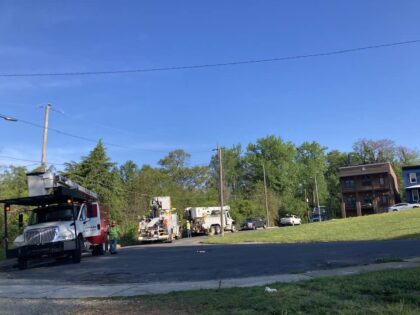
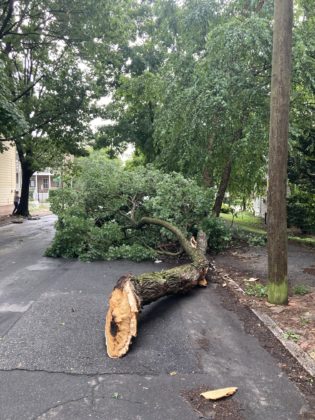
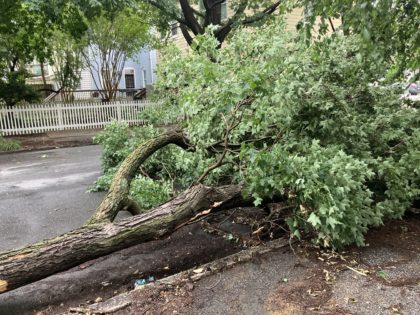
A short but powerful series of thunderstorm cells ripped through parts of central Virginia, including the City of Richmond. Power has been knocked on several blocks of the neighborhood, including the Overlook condos, parts of Laurel Street, Cherry Street, China Street.

According to neighbors, Dominion workers believe power will be returned sometime this afternoon. A ‘tree truck’ needed to be brought in to work on interfering, downed trees.

City Profiteering From Rising Gas Prices

The Times Dispatch is reporting that the City is expecting residential gas bills to increase 40% due to rising fuel costs.

https://richmond.com/news/local/richmond-gas-bills-expected-to-increase-40-due-to-rising-fuel-costs/article_ec3cedd7-bfc5-514f-a7e1-34aba1f9f98d.html

What the newspaper and other mainstream local media are not reporting is the expected bonanza the City government is anticipating from this energy price spike.

The highly questionable, if not illegal, ‘PILOT’ (Payment In Lieu of Taxes) in the City’s residential utility bills continues to pad the City’s ‘General Fund’, while hitting the City’s poorest residents the hardest.

Of course, this may be even more egregious when it comes to the water utility

We don’t hear much about this resolution!
https://richmondva.legistar.com/View.ashx?M=F&ID=5329677&GUID=812DB37B-E05C-4C4A-BAFC-297DCE1B04DB

AYES: 9 NOES: 0 ABSTAIN:
ADOPTED: JULY 24 2017 REJECTED: STRICKEN:
INTRODUCED: June 26, 2017
A RESOLUTION No. 2017-R049
To request that the Chief Administrative Officer cause the Department of Public Utilities to prepare and submit to the Council a plan to phase out Payments in Lieu of Taxes from the Department of Public Utilities over a ten year period.
Patron – Mr. Agelasto
Approved as to form and legality by the City Attorney
PUBLIC HEARING: JULY 24 2017 AT 6 P.M.
WHEREAS, the Council of the City of Richmond, by adoption of this resolution, establishes its intent to eliminate Payments in Lieu of Taxes (“PILOT payment”) from the
Department of Public Utilities; and
WHEREAS, eliminating or reducing the PILOT payment would require an amendment to
section 13.06 of the Charter of the City of Richmond (2010), as amended; and
WHEREAS, the Council believes that the elimination of the PILOT payment would best
be accomplished by an approach that gradually phases out the payment over several years to provide for budget adjustments due to the lost revenue; andWHEREAS, the Council believes that it is in the best interests of the citizens of the City
of Richmond that the Council request that the Chief Administrative Officer cause the Department of Public Utilities to prepare and submit to the Council a plan to phase out PILOT payments from the Department of Public Utilities over a ten year period;
NOW, THEREFORE, BE IT RESOLVED BY THE COUNCIL OF THE CITY OF RICHMOND:
That the Council hereby requests that the Chief Administrative Officer cause the
Department of Public Utilities to prepare and submit to the Council, no later than November 1, 2017, a plan to phase out PILOT payments from the Department of Public Utilities over a ten year period and that contains, at a minimum, the following:
1. A requirement that during the ten year phase out period, the Department of Public
Utilities will continue to make PILOT payments to the General Fund and will assess alternative
fees to City departments designed to recapture the amount of the PILOT payments.
2. A requirement that the alternative fees collected by the Department of Public
Utilities will be used to decrease the utility rates charged to the residential and commercial customers of the Department of Public Utilities.
3. A requirement that the ten year phase out plan will only apply to PILOT payments
and all other payments required or assessed by the City shall continue to be paid into the General Fund.
4. A requirement that during the ten year phase out period, the Department of Public
Utilities shall submit annual reports showing the fees and taxes on each utility paid through PILOT payments.
5. A requirement that the ten year phase out plan begin in the fiscal year commencing
July 1, 2018, and ending June 30, 2019, with the exact amount of the revenue reduction to be determined by the phase out plan schedule and the alternative fees proposed by the Department of Public Utilities.

Dominion and Government Ignore Citizens On Solar


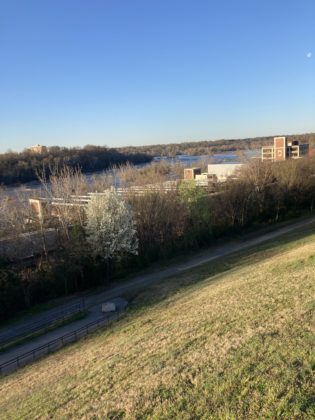
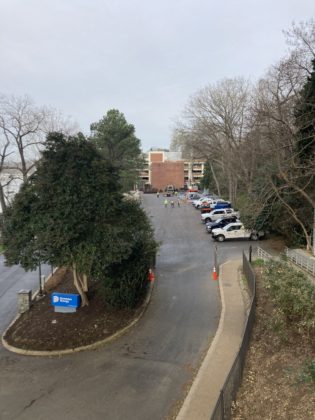
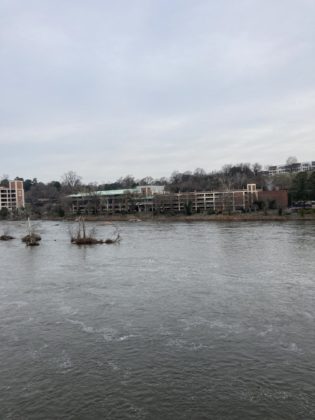
Dominion is implementing solar on the roof of it’s riverfront parking garage this week after staging materials last week. Though some solar advocates cheer, it deserves more scrutiny.

While there is widespread support for solar in the neighborhood and elsewhere, this installation comes after repeated complaints that it will block more of the historic public view of the James River from Oregon Hill. And in the big picture it is part of a disturbing pattern from Dominion and the City.
That Dominion is ignoring neighborhood residents should come as no surprise. The company has a history of deception and betrayal. In 1999-2000, Dominion and the neighborhood were in bitter contention over plans to build a high rise office complex on the riverfront. The neighborhood worked with outside groups to try to hold Dominion more accountable, even though City Council and Planning Commission notably did not. Ancient history, maybe, but note that Dominion still clings to its City-given legal right to build something taller.
In pushing themselves onto to the riverfront location, approval was given in part because they promised to move their operations center with “hundreds of jobs” from the county to Tredegar Street. But of course they lied and that did not happen.
And in the process of trying to smooth things over, Dominion met with different community representatives about riverfront plans. At the time, traffic was brought up as a chief concern, and Dominion assured City Council that existing roadways could serve the additional traffic created by its development. They lied again. Ten years later, Dominion insisted on a new road while at the same time saying it had no plans for new development “at this time.” And then came Venture Richmond’s push for an amphitheater. It was very sad to see Richmond’s historic riverfront get this corporate driveway treatment. Many trees were cut down and wildlife displaced, and the historic canal was again cut into. When this new road was proposed, Oregon Hill residents suggested extending Spring Street to 5th Street instead. They were ignored.

Getting back to solar and the present day, it’s very important to note that when Dominion did build its complex on the riverfront, the architects created a huge, south-facing, sloping roof for it’s ‘Enron-like’ energy-trading floor FOR solar. PV panels could be put flush to that roof and have little to no impact on the historic river view from Oregon Hill. Despite this long-existing option, Dominion is building more height on top of its parking garage. Once again, Dominion purposely ignores citizens and alternatives.

So what, some solar advocates say. They don’t care about this historic neighborhood or even the riverfront. So what if this parking garage array is mostly a prop for the Dominion executives and politicians to point to during protests, it’s still more solar.
Maybe, but consider that, above all, this is more energy that Dominion OWNS, not the government, and certainly not citizens.

Case in point- the City’s Department of Public Utilities is beginning to re-roof the Byrd Park reservoir. Planned for many years, this project is a perfect opportunity for the City to make its own investment in renewable energy by copying what other localities all over the world have done and add solar to the new reservoir roof. The energy produced there could be invaluable for emergency/disaster recovery operations. Citizens have asked for it. The Byrd Park Civic Association asked for it. Yet there is NO mention of solar whatsoever in the planning. When our previous Councilperson, Parker Agelasto, asked for it years ago, the DPU head at that time (now PROMOTED by Stoney’s administration) deflected by saying it would violate agreements with Dominion.

Certainly, there are other examples where ‘muni-solar’ opportunities been discouraged and stomped on by Dominon. More ‘solar schools’ was one of the goals of the ‘Put Schools First’ movement– remember how the previous Dominion C.E.O. suddenly inserted himself in school board politics? Now, instead of fixing up old schools (and adding solar!), the local corporate media tells us that City Council and School Board are too busy fighting over the building of a NEW George Wythe High School.

Let’s look at the statewide level. Recently, Aaron Sutch, the Virginia program director for Solar United Neighbors, highlighted Dominion’s “bogus arguments” in regard to state policy and solar OWNED by communities and citizens. Even when ‘big box’ out-of-state corporations have asked to ‘go solar’ in Virginia, Dominion has discouraged it. It’s reprehensible given the opportunities. Coming back to local, recognize that Stone Brewing continues to expand here but does not ‘go solar’ here, despite having lots of solar at its California facilities. They know that Dominion and government discourages it. Dominion overall does not want distributed rooftop solar, they would rather have ‘utility-sized’ solar that THEY CONTROL installed as Virginians argue about ‘solar farms’.

The point is that Dominion will continue to pretend to ‘go solar’ while ignoring citizen and neighborhood concerns and doing all it can to discourage anyone else from competing with them for energy production. Indeed, this is why Dominion took over so much of Richmond’s riverfront in the first place. Government, captured by corporate money, will not stand in Dominion’s way. This is detrimental to not just Virginia citizens, but for humanity, as we face more climate change.

Tell SCC: Support SRECs for Community Solar

TODAY is the deadline to send comments to the SCC to help increase VA SREC values.

Background:The VA State Corporation Commission is setting the rules for the implementation of the DG carveout for the Virginia Clean Economy Act as it relates to Dominion Energy filing. The carveout is the percentage of the 100% clean energy goal that will be allocated to distributed solar projects. The Commission will determine what kind of energy projects qualify for the carveout and ultimately how much SRECs are valued. The commission will decide the extent to which solar homeowners are eligible for these credits, and if so, how much these credits are worth. Their decision will affect the value of SREC’s, an important production-based incentive for solar on homes, businesses, and nonprofits in VA.
We’re asserting that to maintain a high value SREC, it’s important that the SCC reserves the solar carveout in the VCEA exclusively for net metered, customer-owned and sited solar. We also see the opportunity to ask the SCC to increase the floor of the carveout as well. But the biggie is making sure that the carveout is reserved for customer owned and sited generation. Solar United Neighbors is joining a number of industry groups to intervene in the proceeding but it’s important that as many VA solar advocates (you’ll) comment as well!
Submit Comments to the SCC before COB 2/12/21.
The commission is accepting public comments regarding Dominion Energy’s filing through Friday.
Go this link:
https://www.scc.virginia.gov/casecomments/comment/PUR-2020-00134
Follow the directions. Fill out the required information, including your name, address, email and other contact information.
In the section marked ‘Comments’, explain why the SCC should support Virginians’ ability to go solar. We’ve drafted a message below, but please personalize your message. If you have solar, tell the commission how it has benefited you and your family. If you don’t have solar, tell the commission you support expanding solar in Virginia.
Hit the submit button
Email to State Corporation Commission (feel free to customize based on your personal or organizational goals)

Dear State Corporation Commission Staff and Commissioners, RE: PUR-2020-00134
The solar installed on homes and businesses across the Commonwealth does more than provide electricity. It creates good local jobs. It makes our electric grid more reliable. And, it provides clean energy. Distributed solar owners deserve credits for these benefits.
Distributed solar energy must play a role in Virginia’s 100% clean energy goal as part of the Virginia Clean Economy Act. You can see that this happens by taking the following steps:
– Reserve the distributed generation carveout solely for customer-owned and sited,net metered solar systems.
– The 1% distributed generation carveout should be a minimum, not maximum amount. This will ensure that more Virginians are able to participate and receive a value for their role in Virginia’s clean energy transition.
– Increase the carve out by a minimum of 1% of the annual RPS requirement on a yearly basis to ensure maximum economic impact. This is consistent with the economic transition requirements contained in the Virginia Clean Economy Act.
Distributed solar is responsible for creating a majority of all solar jobs in Virginia. More distributed solar means more jobs and local economic growth in our communities. For every 1MW of residential solar, 31 jobs are created. Every kW of distributed solar brings $2,425 in economic activity.
Limiting the types of projects eligible for the distributed generation carveout will make solar more accessible to low-income families and support a more broad portfolio of projects in the Commonwealth.
Thank you for reading my letter. Please ensure customer-owned solar plays a role in our clean energy mix.
Regards,