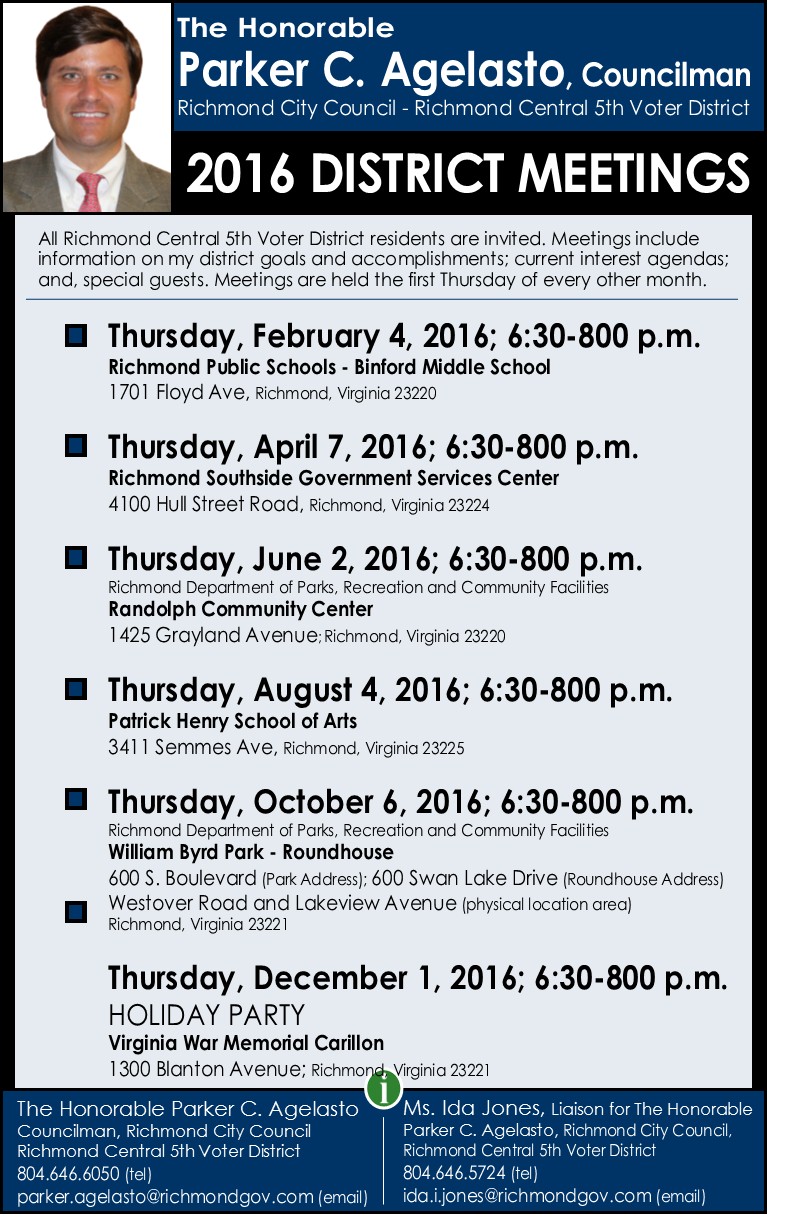
5th District Meeting This Thursday
Reply

From City press release:
The City’s Office of Emergency Management is hosting an April Community Emergency Response Team (CERT) Basic Recruit Training session. The free 20-hour CERT session is scheduled for April 9, April 16, and April 23 from 9 a.m. to 5 p.m. each day. All training sessions will be held at the Richmond Fire and Emergency Service Headquarters, 201 East Franklin Street. Participants must attend all three days of training to receive certification.
In the aftermath of a disaster when people feel compelled to help their community and neighbors, the skills that the CERT program teaches become invaluable. The City’s Office of Emergency Management maintains a robust CERT program, which has many active members that assist during non-emergency events. The 20 hour CERT training program educates participants about disaster preparedness and hazards that may impact their area. The program trains individuals in basic disaster response skills, such as fire safety, light search and rescue, team organization, and disaster medical operations. Participants train alongside members of their community who will be part of their CERT Team, as well as with participants from other communities. Using the training learned in the classroom and during exercises, CERT members can assist others in their neighborhood or workplace following an event when professional responders are not immediately available to help. CERT sessions are taught by the Office of Emergency Management, Richmond Fire Department and the Richmond Police Department.
To register for the April CERT training session, call (804) 646-2504 or visit www.RichmondGov.com/fire/EM_Cert.aspx. The registration form may be downloaded at http://www.richmondgov.com/fire/documents/CERT2016RegistrationForm.pdf.
A fall 2016 CERT training session is scheduled for Aug. 13, Aug. 20, and Aug. 27.
# # #
The monthly 4th Precinct MPACT (Mayor’s Participation, Action & Communication Team) meeting is scheduled for Thursday, March 17, 2016 at 6:00 p.m. The meeting will be held in the library of Linwood Holton Elementary School (1600 West Laburnum Avenue).
From email announcement:
This month we invite you to attend a MPACT conversation with special guest speakers, Sector 412 Lieutenant Keyshawn Manns and 4th Precinct Personnel. Officer Paul Lewis, Richmond Police Department, will discuss the Neighborhood Watch Program. Sarah Henrikson, with the Department of Public Utilities will discuss the Wastewater Division, Pretreatment Department. Join us at this meeting to hear from your neighbors, share your ideas, and identify solutions we can implement together to build a better Richmond!
From City press release:
Public Meeting to Detail Main and Franklin Streets
Separated Bike Lane Project
~Community meeting scheduled to obtain resident input ~Richmond, VA – The initial design details for the proposed Separated Bike Lane Project, also known as a Cycle Track, will be available at a public informational meeting next week. The bike lanes start at Ninth Street on both Main and Franklin streets and end at Laurel Street. A separated bike lane is a path with the on-street infrastructure of a conventional bike lane however, it is physically separated from motor traffic and distinct from the sidewalk.
The meeting to review the plans will be on Wednesday, March 16 at 5:30 p.m. at the Richmond Main Library, 101 East Franklin Street. Residents are invited to attend this meeting to learn more about the project, the roadway analysis and to review the designs as well as provide feedback and recommendations.
The City’s Department of Public Works and Department of Planning and Development Review will be joined by VHB, the consultant, to address questions and concerns during the community meeting.
This project was first proposed in the Strategic Multimodal Transportation Plan known as Richmond Connects and it was also included in the Bike Master Plan. Federal funds will cover 80% of the project’s $300,000 cost with the city providing $60,000 in funding.
Once completed, this cycle track will provide a continuous east/west route along with a connection to the Floyd Avenue Bike Boulevard.
For more information on City services, please visit www.RichmondGov.com.
###
The Richmond Police Department is accepting applications for the 21st Citizen’s Police Academy, April 19 – May 19, 2016. Apply here:
From City announcement:
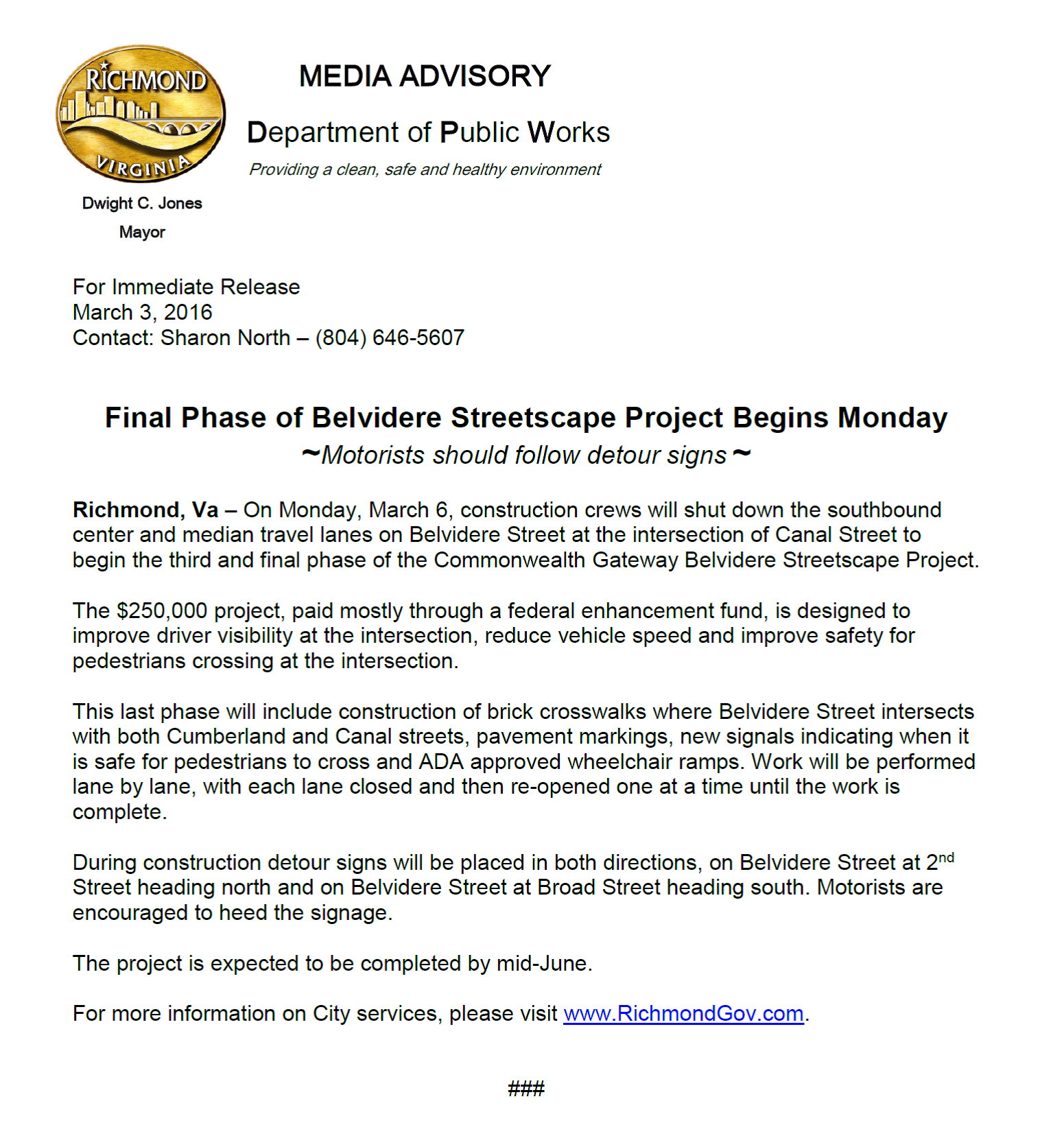
Mayor Dwight C. Jones, and the Richmond Department of Planning & Development Review, will host a meeting on the next round of improvements for the Richmond Riverfront on Thursday, March 3 at 7 p.m. at the Virginia War Memorial Auditorium, 601 S. Belvidere St.
Hargreaves Associates will provide a concise overview of the original Riverfront Plan recommendations for the area surrounding the former Lehigh cement plant, and observations on proposed improvements to the greater East Riverfront Area. The objective of the meeting is to collectively identify opportunities to evolve that vision. The presentation will begin at 7 p.m. with the balance of the meeting open to questions and comments from the audience.
For questions or more information, contact Mark Olinger, Director of Planning & Development Review, 804-646-6305 or Mark.Olinger@richmondgov.com
From the FaceBook event page:

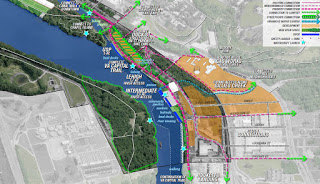
Come give your input on the Riverfront Project that will be done in tandem with the T. Tyler Potterfield Bridge. There will be a conversation with the artist and then if weather permits we will walk the project site!
http://richmondvaannouncements.blogspot.com/2016/02/city-names-artist-for-riverfront-art.html
There was a forum meeting yesterday in part of the downstairs ballroom of the Altria Theater about the homeless and the future of Monroe Park. It became very crowded and more chairs were brought in. It was kind of weird as lots of loud laughter was heard on the other side of the partition where I guess there was another gathering of some sort.
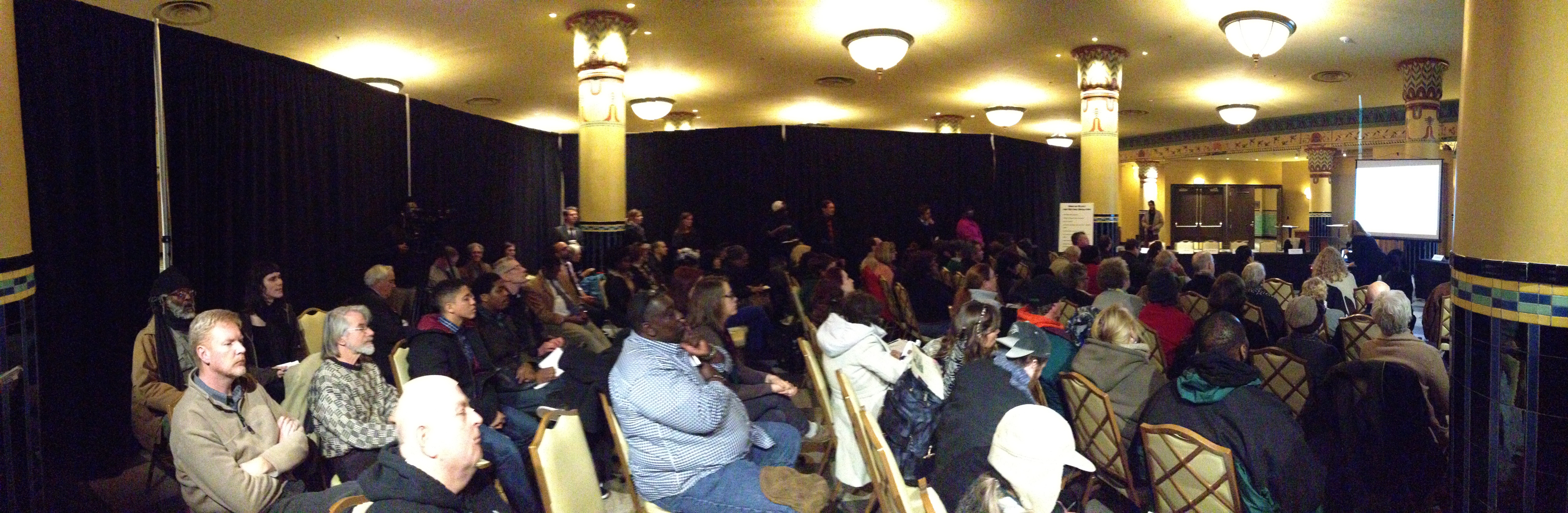
After an introduction by Debra D. Gardner, Richmond’s deputy chief administrative officer for human services, the director of Homeward, the planning and coordinating organization for homeless services in the greater Richmond region, presented some statistics and polling data.
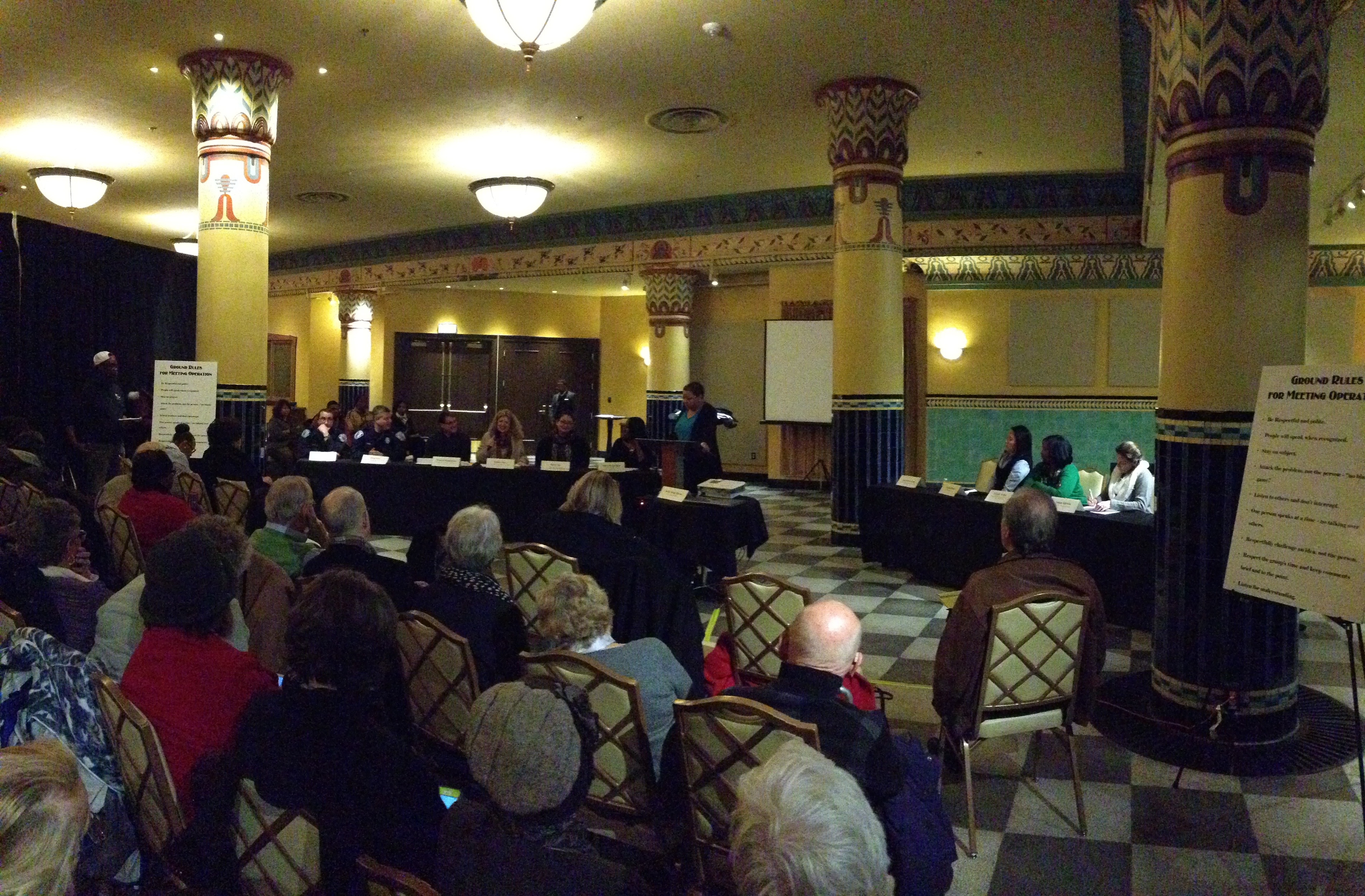
After a few questions were asked about this presentation, the meeting moved into a panel by the leaders or representatives of several area homeless service providers.
One question that was not given a definitive answer was whether homeless service providers would be allowed in Monroe Park after renovations were done. The Monroe Park Conservancy was there, as was the Mayor’s representative, VCU representatives, and Director of Parks, Recreation and Community Facities Norman Merifield, yet they all stayed mum on what protocol will be after the renovation.
On February 8, 2016, Richmond City Council faced a historic decision on whether to approve the City administration’s BRT (Bus Rapid Transit) proposal for Broad Street. Council members were under a lot of pressure to do so. The corporate and development ‘community’ was pulling out all the stops to make this happen. They enlisted the help of an ‘anti-poverty’ campaign, the Partnership for Smarter Growth (PSG), and ‘young professionals’ to create a slick ‘astro-turf’ or ‘grass-top’ combo that declared BRT the first step towards better mass transit in RVA. Having won state and federal funding, buttressed by promises of hundreds of millions in ‘economic development’, the corporate and developers got the media to portray the GRTC BRT ‘Pulse’ proposal as inevitable, unquestionable, and unstoppable. To top it off, with a few favors pulled, even the Governor issued an unbecoming threat to take money away if BRT was not approved immediately.
In opposition to this speeding vehicle, a plucky and unique coalition of small business owners, neighborhood associations, N.A.A.C.P. activists, and citizens quickly formed to try to head off ‘the Pulse’. This group included members of City Council’s own GRTC Task Force who had resisted previous attempts to strong-arm endorsement of the BRT ‘Pulse’ proposal. The local N.A.A.C.P. expressed its concerns that the current BRT proposal was excluding current GRTC ridership and black East End communities. The local ‘PTB’ (Powers That Be) were furious with this grassroots group, which called itself the RVA Coalition for Smart Transit, and got the local media to wrongly cast them as being anti-progressive/NIMBY, selfish, and solely concerned about parking. Unshaken, the coalition answered back with strong questions about faulty ‘Pulse’ studies, misleading cost estimates, and lack of longterm financing. They reiterated their support for SMART mass transit and suggested an alternative plan. They pleaded with City Council to NOT make a hasty decision, to consider that the real deadline was not till September, and vote for a delay in approval.
To make a long story short, City Council surprised everyone that February night by agreeing to delay the BRT approval vote until August. How did this happen? One Councilperson listened and recognized the concerns of citizens. This Councilperson was part of a younger subset on Council that was tired of the Mayor’s administration’s incomplete and rushed projects. This Councilperson, who planned to eventually announce and run for Mayor, wanted distance from disastrous, wasteful, ill-planned proposals like the Shockoe baseball stadium and Redskins training camp. This Councilperson wanted to establish a new standard of leadership. This Councilperson followed the money arguments and made conclusions with individual attention. This Councilperson was then able to convey those conclusions and convince just enough colleagues to win the delay.
The immediate result was gnashing of teeth by ‘Pulse’ supporters. The anti-poverty campaign and PSG moaned about how mass transit was now doomed. The prominent family that owned the new downtown boutique hotel was visibly upset- one might say miffed even. The family’s patriarch threw a temper tantrum in the lobby of City Council chambers. Corporate special interest group Venture Richmond ‘leaked’ a memo to the media that questioned City Council’s ability to govern. The Mayor retreated to his church and and then to his vacation condo in Palm Beach. The Governor reiterated his bullying threat (but did not act on it). Henrico County officials publicly doubted their future support of BRT and GRTC in general.
But that, my friends, is far from the end of the story. As more days followed the Council vote, new, independent studies started coming out, ones that showed not only flawed projections, but also ways to make better BRT decisions. On top of that, new Federal data reports became known, which showed several missed checklists for ’the Pulse’ and revealed that the City was in danger of future lawsuits if it did not adjust its planning. A month after the vote, City Council was celebrated as a ‘check and balance’ that had adverted disaster. Buoyed by the new information as well as building on GRTC rerouting efforts, a contingency plan emerged from the depths of GRTC, one that had previously been buried, one that was more City-centric, and scaled back the BRT line and instead favored more of a circulator project. This high frequency circulator would touch on Carytown, museums, and Boulevard development to the west on one portion, and touch on Fulton, Church Hill, to the east on another portion. It’s east-west orientation reminded many Richmonders of the old trolley lines and gained favor. The new GRTC circulator plan, while continuing BRT elements, included other possibilities as well- offshoots that could better serve portions of Southside and further Northside, seasonal routes that would connect riders with the riverfront and festival areas.
And that is when suddenly the pent-up interest in mass transit surged. VCU President Dr. Rao, recognizing a sea change, and cognizant of VCU’s role as Richmond’s biggest employer and obviously largest entity on the Broad Street footprint, went to the VCU Board of Visitors with a rewrite of his previously tepid and weak support letter of the BRT project. In the new letter, he made a commitment to Richmond mass transit, BRT and/or circulator. He got the VCU Real Estate Foundation to consider what it could do in terms of land donation and financing support. Dr. Rao announced a real phase out of the private Groom Transportation shuttles and new cooperation with GRTC- as long as planners made a real effort to sit down with VCU planners. Furthermore, University of Richmond President Crutcher declared that U of R would use a small portion of its humungous endowment to double down on its investment in downtown. It would also commit to end its own private Groom Transportation contract and help financially support the GRTC circulator project along with a large increase in the route 6 connection to U of R. Virginia Union University, not to be left out, made its own commitment to utilize and support GRTC. With these new stakeholders coming on board, the longterm financing and ridership outlook for the BRT/circulator was more assured and Richmond taxpayers breathed sighs of relief.
But that’s not all…with more university students and City residents looking forward and excited by the new, reformed proposal, a new optimism and can-do attitude infected not just the City, but the RVA region. GRTC buses noticed new ridership, while building on old ridership. Small businesses wanted to work more with GRTC. Within a year of the vote, the N.A.A.C.P., ecstatic about new, permanent attention to East End mass transit, acknowledged a subtle but real positive change in race relations. Henrico County officials had a change of heart and suggested more, not less, investment in GRTC, as well as redoubled efforts for better bike/pedestrian infrastructure, and not just on the Broad Street corridor either. Perhaps more importantly, Henrico officials agreed to create an express GRTC shuttle from downtown Richmond to RIC airport, as well as a shuttle to Staples Mill Amtrak train station. Suddenly other regional cooperation became tangible (including a Boulevard ballpark and possibly another Amtrak station). Federal matching transportation funds became more possible. High speed rail dreams once again looked closer to becoming reality for the River City.
And the story just keeps going, because what really happened the night of February 8 was not just a sorely needed delay in a lackluster corporate developer-led plan masked in ‘feel good’, half-baked BRT, it was a signal, a real bleat of pulse, if you will, that Richmond’s government, for and by the citizens, was not dead. The Councilperson, the one that took the risk of going against the astro-turf, supposedly unstoppable, corporate campaign for the current BRT proposal, challenged the Mayor and Governor’s bullying, showed that wise leadership was still possible from City Council. That there was fiscal responsibility and care for taxpayers’ money. This Councilperson demonstrated that sincere support for BRT/better mass transit transcended the current proposal, that the haste was manufactured and totally unnecessary, and saw that better information, fiscal diligence, and more stakeholder involvement made all the difference. This Councilperson was later elected Mayor, and was loved by the citizens. This Councilperson made a lasting legacy. This Councilperson kept it real.