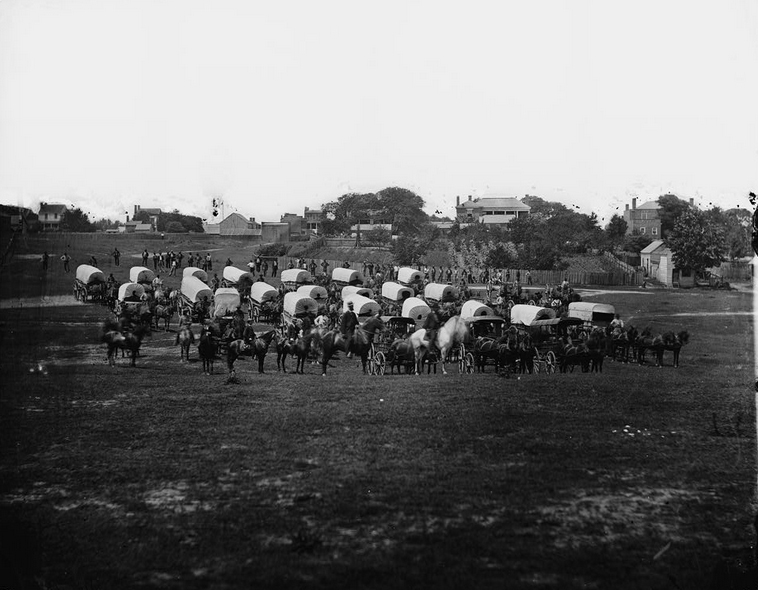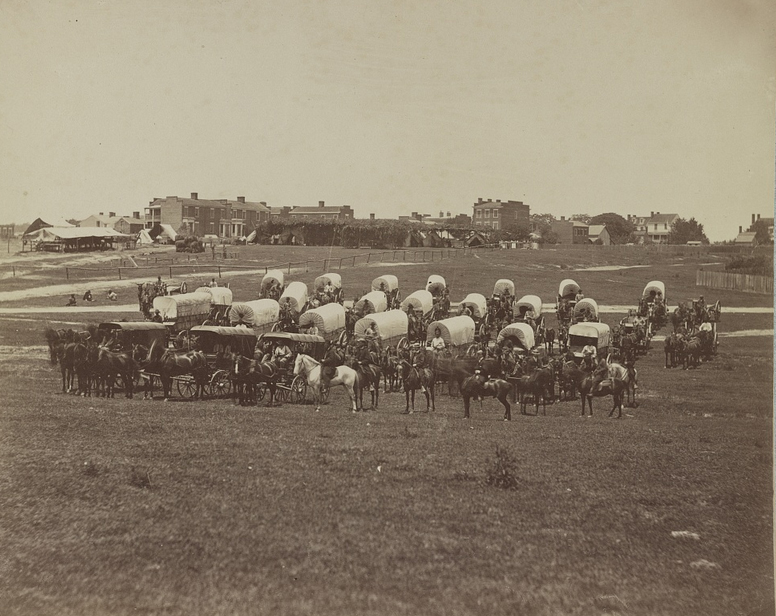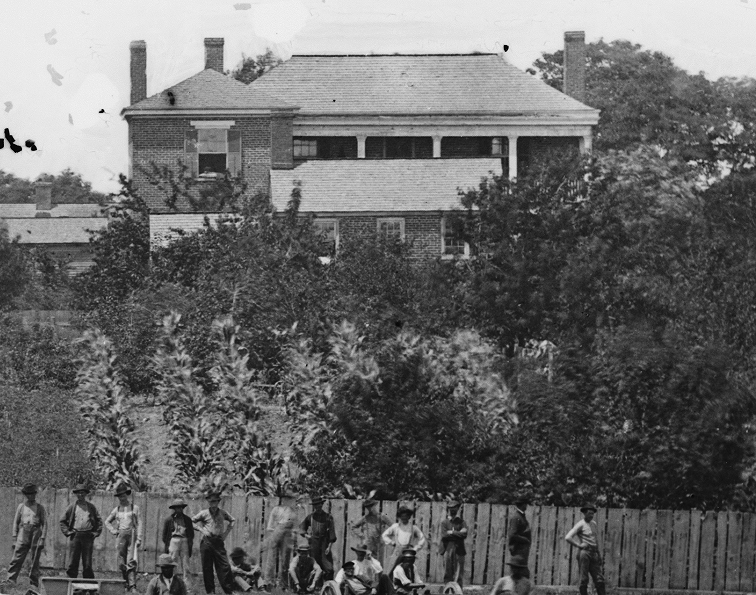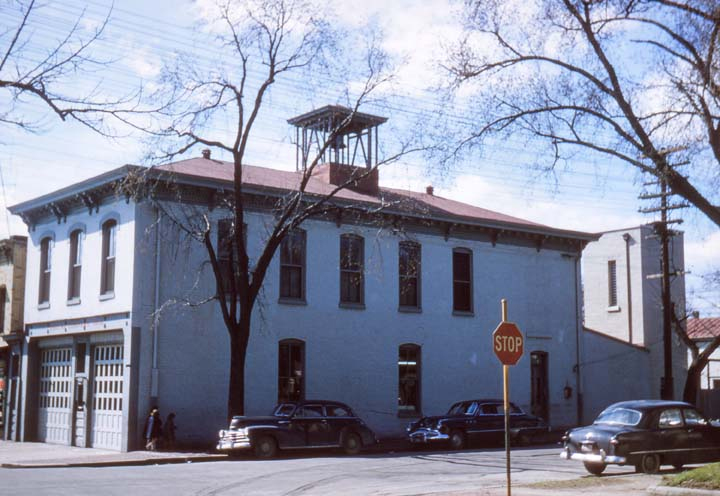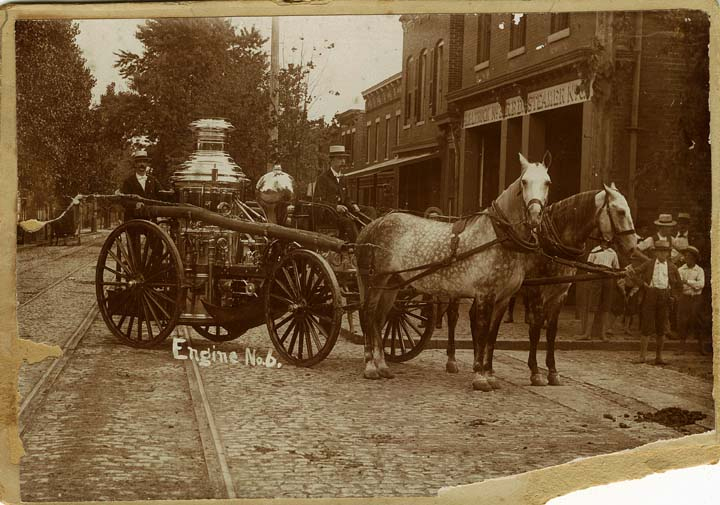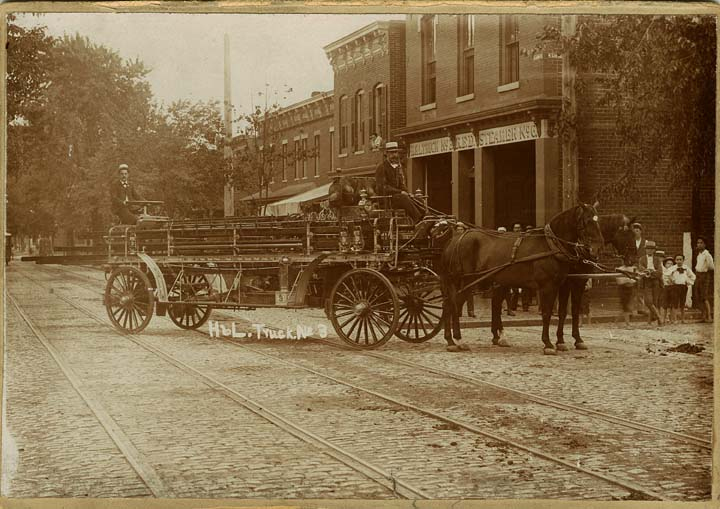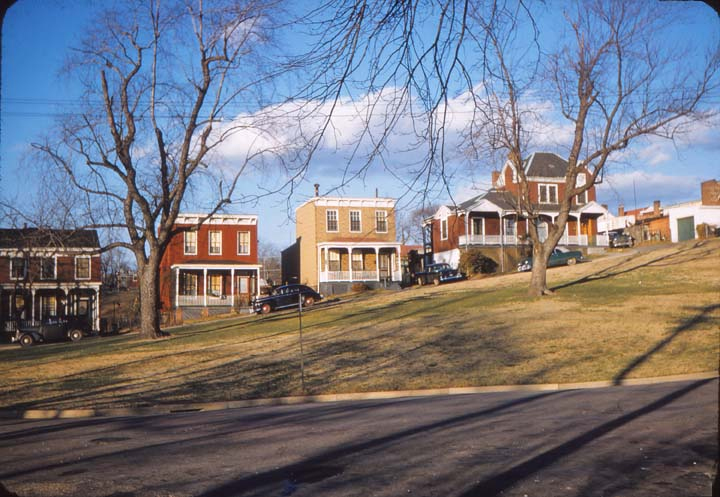
Oregon Hill suffered tremendous losses in housing and history when the Downtown Expressway‘s construction tore a great scar through the neighborhood in the 1970’s. Among the resources that were lost was the Engine House No. 6 that was formerly at the corner of Cumberland and Laurel. The bell that was in a cupola on the roof of Engine House No. 6 was moved to the replacement firehouse at Canal and Jefferson Streets. These photographs in the collection of the Richmond History Center, show the original firehouse in 1957 and 1895:


Photo credits:
slide of building, 1957, Richmond History Center
fire engine photos, 1895, Richmond History Center
Category Archives: history
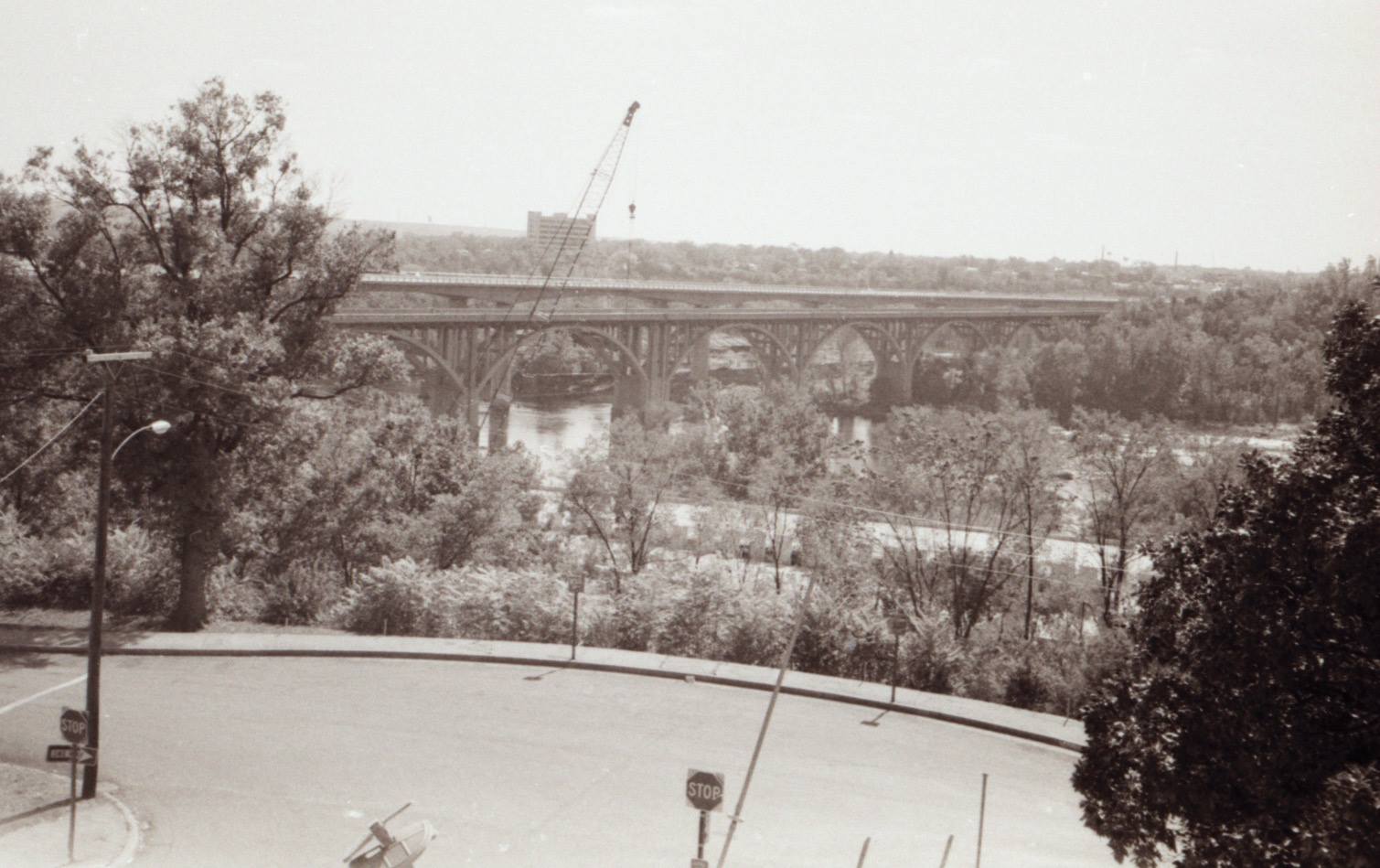
The Old and New Lee Bridge
Valentine Museum Photo of Riverside Houses
While he has certainly generously contributed before, neighbor Charles Pool has agreed to help focus on Oregon Hill history with the help of old photographs, maps, and other material every Thursday on a regular basis (aka “Throwback Thursday”). Here is a first post under this arrangement:
In 1924, the city expanded Oregon Hill’s Riverside Park between the gazebo and Hollywood Cemetery. Prominent businessman Moses Nunnally saved four houses from demolition by moving them from the land newly condemned by the city for the park to 810-816 Riverside Park. Ethyl Corporation later demolished 812 Riverside Park and the City of Richmond demolished 816 Riverside Park, while 810 Riverside Park and 814 Riverside Park have survived. This 1956 photograph in the collection of the Richmond History Center (formerly known as the Valentine Museum) shows the four houses 32 years after they were moved.
Hollywood Cannon and Belle Island Tour
There will be cannon fire as part of the annual Jefferson Davis birthday ceremony in Hollywood Cemetery on Saturday, June 6th, from 9:00 am to about 11:00 am. The ceremony will include a keynote speaker, Rev. Herman White, Chaplain of the North Carolina Division, SCV, as well as a bag pipe band, rifle squad, artillery salute and wreath laying. The event is free and open to the public. The cannon fire will happen towards the end of the event.
And if you want to know more about that Belle Isle prison camp, there’s a Sensory History Tour of Belle Isle Prison Camp on Saturday, June 6, noon to 2 p.m. This conversational walking tour is sponsored by the Tredegar Society of the American Civil War Museum in partnership with RVA Archaeology. Tickets cost $10. www.tredegar.org/ts.aspx or Sean Kane: skane@acwm.org or 804 649 1861, x123.
Possible Demolition and Replacement of the VCU Gladding Residence Center
From Councilperson Agelasto’s FaceBook page:
Many VCU students live in the immediate neighborhoods surrounding Monroe Park. Last year, VCU composed a Housing Master Plan to address its future need for on-campus options. Take a look at plans that include the possible demolition and replacement of the Gladding Residence Center on W. Main Street. The entire proposal would net an additional 800+ on-campus beds for students.
http://www.housing.vcu.edu/media/housing/docs/VCU_Housing_Master_Plan_2014_FINAL-screen.pdf
…
Some Oregon Hill neighbors have already stressed to VCU officials the importance of preserving the historic Branch Bath House on Main Street, which is part of the Gladding Residence Center.
Architect Robert Winthrop was instrumental in convincing VCU to save the Branch Bath #2 when they built the Gladding residence.
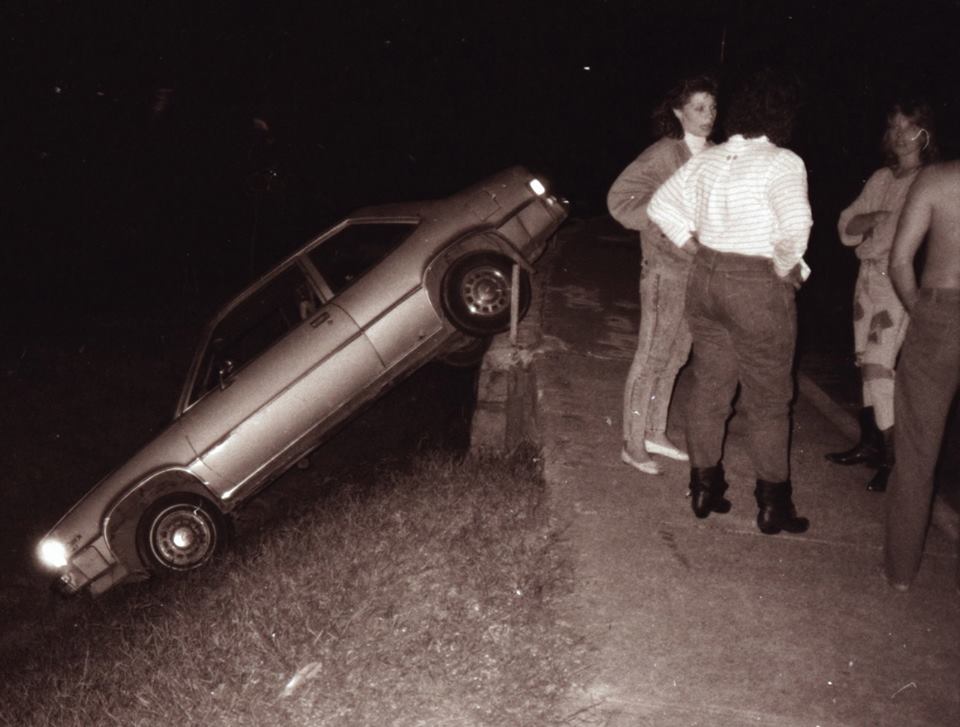
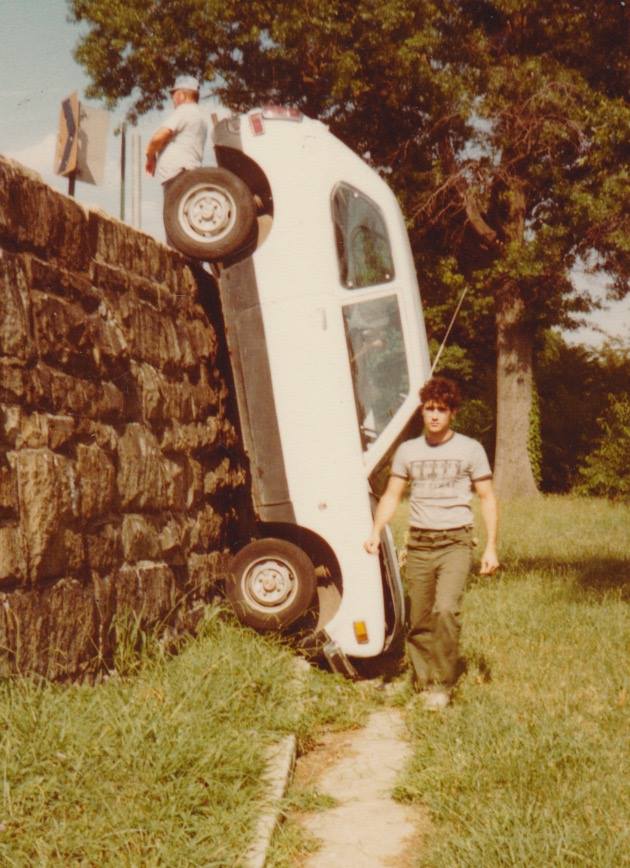
Another 80’s Overlook Mishap
Yet another photo from William Picket of yet another 1980’s Overlook mishap…
1980’s mishap at the Overlook…
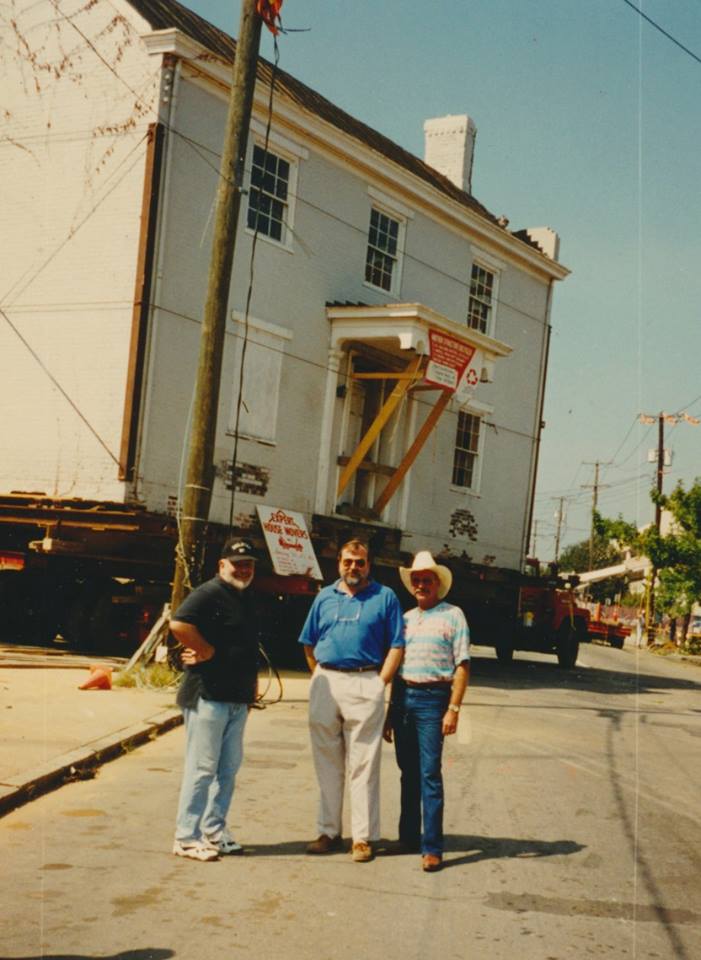
Bought & Moved
A old photo (courtesy of William Pickett) of James Bradford, Joe Seipel, and Addison with the old house they bought.
The Jacob House, built in 1817 with labor by freed black men for a Quaker owner. An historic icon displaced from its original location by VCU. Thankfully, these folks saved it from destruction. Currently owned and well maintained by the Oregon Hill Home Improvement Council. The current tenant is civil engineer George Nyfeller and his company.
School Kids
St. Andrew’s School’s FaceBook page featured this great photo:
Talk about #TBT! This photo of St. Andrew’s students playing in the yard is likely from right around 1900. They would have all lived close by in the Oregon Hill neighborhood and attended St. Andrew’s Church.
Alexander W. Weddell
Besides being the birth date of President Thomas Jefferson (1743), April 13th is also the birth date for diplomat Alexander W. Weddell (1876), who is buried in Hollywood Cemetery.
Hollywood Cemetery has a short bio on it’s website. Here’s a excerpt:
By 1923 the forty-seven-year-old, tall, courtly Virginian was convinced that he would probably remain a bachelor for the rest of his life. In February of that year, however, a meeting for afternoon tea in a fashionable Calcutta hotel with some old Virginia friends and a vivacious widow from St. Louis quickly led to courtship. Weddell arranged to take his leave and met Mrs. Steedman’s party in Rangoon, Burma. The romance continued on the trip back to the United States, and the couple married in St. Ambrose Chapel at the Cathedral of St. John the Divine in New York City four months after first meeting.
The couple returned to Calcutta late in 1923 where they remained until Weddell was transferred to Mexico City in 1924. Upon arrival in Mexico, the couple found a nation that was torn by revolution. Years of US intervention into Latin American affairs and resentment caused by the vast profits American corporations syphoned from their extensive Mexican holdings were fueling a strong “anti-Yankee” sentiment. Americans demanded restitution for the deaths of several US citizens during Poncho Villa’s border raids into Arizona and New Mexico. Weddell, who initially sympathized with Mexican interests, found coping with corruption and bureaucracy extremely vexing and discouraging.
In 1928, deeply concerned about his wife’s health, yearning to return to Virginia, and disappointed in his assignment by the Republican administration to Montreal, Weddell, a southern Democrat, resigned from the diplomatic corps. Weddell’s retirement came to an end, however, in 1933 when he finally achieved his dream of becoming an ambassador, being assigned by Franklin D. Roosevelt to the mission to Argentina. He and his wife spent “five interesting and happy years in that wonderful country,” after which Roosevelt offered Weddell the very difficult post of ambassador to Fransisco Franco’s Spain in 1939. By 1942, advancing age, health problems, and the cumulative frustration of working with an unresponsive State Department and observing Nazi influence in the Madrid government convinced Ambassador Weddell to retire permanently from foreign service.
By 1943 the couple had returned to Richmond where he was elected president of the Virginia Historical Society, and she resumed her gardening and continued her charity work.