From the FaceBook event page:
Category Archives: history
‘Letters from the Battlefield’ now on display at the Virginia War Memorial
From the RVANews.com article:
Letters written by Virginia armed servicemen and sent to loved ones are on display in an exhibit at the Virginia War Memorial through the end of the month.
Items in “Letters from the Battlefield” include V-mail sent by soldiers and sailors during World War II, letters written by ballpoint pen in the jungles of Vietnam, and emails sent from those who served in Afghanistan and Iraq.
“Letters from the Battlefield” runs until February 25th.
JEB Stuart Cannonfire
From Hollywood Cemetery management:
This message is to remind you of the memorial ceremony for JEB Stuart beginning at 3:00 p.m. on Sunday, February 10th.
There will be cannon volleys fired as a part of the memorial service. The participants have assured me that the minimum amount of powder will be used in the volleys.
Thank you for assisting us in getting this message out to the surrounding neighbors.
China Street Trolley Tracks
As the repair crew worked on the China Street water pipe issues yesterday, Richmond’s old trolley tracks became visible once again.
This reminds me, I am hoping to hear more soon about the new City Council plans for GRTC.
Virginia War Memorial hosts 3rd Artifacts Roadshow
Boosted from the the mothership, RVAnews.com:
The Virginia War Memorial will host its third Artifacts Roadshow this Saturday, giving members of the public a chance to have military-related memorabilia from any era reviewed by experts.
There is no charge for artifact reviews, and no monetary values for items will be given. Reviews will done by Virginia War Memorial curator Jesse Smith and military collectable expert Robert House.
Weapons and firearms are permitted and will be checked for safety by representatives of Colonial Shooting Academy.
Artifacts Roadshow takes places from 10:00 AM – 12:00 PM on Saturday, January 26th at the Virginia War Memorial, located at 621 S. Belvidere Street.
Landmark Theater Sold-Out For Tonight’s Lincoln Event
From the Times Dispatch article:
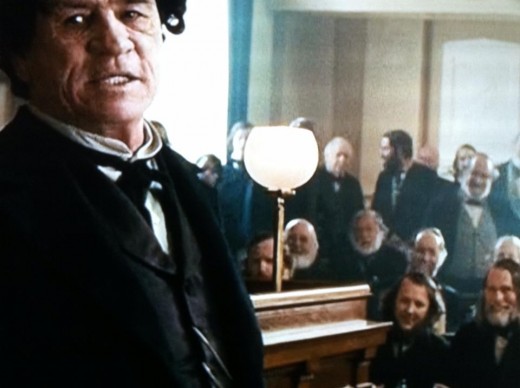
Director Steven Spielberg, screenwriter Tony Kushner and historian Doris Kearns Goodwin — whose collaboration created the multinominated movie filmed entirely in the Richmond area — will speak tonight at the sold-out Landmark Theater before an audience of 4,200 people.
“Lincoln” has been nominated for seven Golden Globe awards and is expected to pick up several Oscar nominations on Thursday. Kushner’s screenplay was nominated for a Writer’s Guild award for best adaptation.
The Richmond Forum program will be taped for broadcast on WCVE at 9 p.m. Jan. 17 to accommodate “so many more that we couldn’t possibly fit in,” said Bill Chapman, executive director of the forum.
When Chapman heard that “Lincoln” would film here in late 2011, he immediately thought of a program featuring Spielberg and Goodwin, who has appeared twice before at Richmond Forum programs. Her book, “Team of Rivals: The Political Genius of Abraham Lincoln,” was an inspiration for the movie.
“The idea started as a pipe dream,” Chapman said. “She loved the idea. When she was in Richmond during the filming, she talked with Spielberg.”
Chapman’s own overtures to Spielberg’s DreamWorks Studios had begun in June 2011 and picked up during the filming, he said. “It was Spielberg’s idea to bring Kushner into the conversation. It was a great addition. Doris Kearns Goodwin is the beginning of the story as a historian. Kushner interpreted her work for the screen. It makes a nice continuum for the discussion,” Chapman said. “We were very excited about that.”
The forum’s season will continue with former President Bill Clinton on Feb. 8; former astronaut Capt. Mark Kelly with former Rep. Gabrielle Giffords, his wife and survivor of an assassination attempt, on March 9; and Jane Goodall on April 13.
“ghost of Grace”
Henrico Citizen has a recent article that touches on Oregon Hill’s ‘patron saint’, Grace Arents:
Just across Hilliard Road from the Lakeside Town Center, at Lewis Ginter Botanical Garden (LGBG), employees of the Garden often speak of the “ghost of Grace.” At a recent Lakeside Business Association social, a few business owners wondered whether the spirit playing in the shops might be a long-ago resident of the homes that were once on the site – or perhaps the young Grace Arents, Lewis Ginter’s niece.
Beth Monroe, LGBG director of public relations and marketing, noted that Arents – who lived as an adult in the Bloemendaal House and possibly played on the grounds as a child – had a generous nature and was known for her philanthropic efforts, such as establishing a convalescent home for children and founding Richmond’s first public library.
Arents was especially concerned with the plight of urban children, who would often be brought out from Oregon Hill to Bloemendaal Farm so that they could enjoy fresh air and eat healthy foods. “The site of the Children’s Garden is where she grew her vegetables,” Monroe pointed out.
Noting that “places like Lewis Ginter often have a patron saint of sorts,” Monroe said that Arents clearly fits the profile of the affectionate, benevolent, and playful spirit that seems to show up at the Bloemendaal House from time to time. While “Grace’s ghost” has not been heard to giggle, staff members and volunteers have occasionally reported feeling a rush of air when no one else was around, said Monroe. Others have caught a glimpse of a vision in white.
And like the spirit that frequents the Lakeside Town Center, the Garden’s ghost seems to be an especially mischievous one.
“Whenever something odd happens at the house,” said Monroe, “like the lights blink, or a door that was closed is left open, we say, “Ahhh, there’s Grace again!”
James River Park History
I have uncovered some of the what-ifs, but thanks to Phil Riggan for this “History of Splashy Plans for James River Parks” on Richmond.com.
Excerpt:
According to the RTD archives, there were proposals to have “water-related leisure development” on Belle Isle — Richmond’s downtown gem on the James — including an visitor’s center, ice skating rink, waterfront auditorium and a conference center. People could have gotten to the island by way of a monorail that would have connected to downtown Richmond.
The $6 million in riverfront plans at that time did not cover for the proposed monorail and other buildings on Belle Isle, which would have been paid for through private funding. Monorail screams “Disney,” right? We would have been robbed of the pleasure of walking across the Belle Isle pedestrian bridge under the Robert E. Lee Bridge, which opened in 1992. The view of the city skyline from there alone is worth any price and we’re much better off.
Something to think about as more of the area gets paved over.
Panoramic View of Canal
A neighbor, impressed by the 1960’s photographs found at the Library of Virginia, took the liberty of stitching 5 of the photos together to make one panoramic view. This shows the canal (with water!) and the full length of the Tredegar wall, a portion of which was demolished by NewMarket a year ago, and another portion on city property that was illegally demolished recently.
Oregon Hill East of Belvidere
Some local historians argue that is what is now known as Oregon Hill was actually called Belvidere Hill, and Oregon Hill was the part of the neighborhood that used to exist east of Belvidere. Of course, if you want to go further back, what is now known as Oregon Hill was outside of the old City limits and known as part of the Sydney township.
John Murden, who does the Church Hill People’s News site, has been digging around at the Library of Virginia and found the following photos and information:
From the Richmond Esthetic Survey & Historic Building Survey:
In 1964, the Historic Richmond Foundation (HRF) and the William Byrd Branch of the Association for the Preservation of Virginia Antiquities (APVA) undertook an inventory of historic buildings in Richmond. The Richmond City Planning Commission assisted the APVA and HRF in underwriting the cost of the survey. Workers carried out the study in the spring of 1965 under the direction of Paul S. Delaney and Carlo Pelliccia of the University of Virginia’s School of Architecture.
The project confined the inventory to the central part of Richmond, from Boulevard east to Chimborazo Park, and from the James River north to Shockoe Cemetery. The area’s concentration of historic architecture, in addition to the amount of change and demolition going on at the time, prompted this focus.