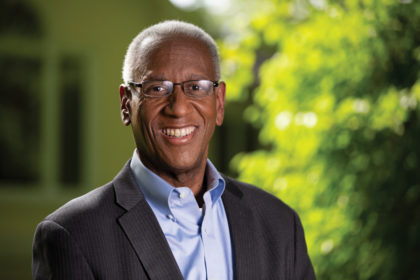
Many Oregon Hill residents were saddened to hear last night that our Congressman Donal McEachin has passed away after long illness.
Many Oregon Hill residents were saddened to hear last night that our Congressman Donal McEachin has passed away after long illness.

I am not a wealthy man. That said, sometimes you have to put your money where your mouth is.
While I don’t think money should equal speech (I support www.MoveToAmend.org), in this case, I am willing to make an exception.
Given the FAILURE of Richmond City Council to fully consider and debate ranked choice voting earlier this Fall season, I am upping the ante for local political reform.
I, Scott Burger, pledge to reward whichever Richmond university student government is the first among Richmond university student governments to conduct a campus wide election of student government officers using ranked choice voting and incorporate ranked choice voting into its constitution/bylaws with a $1,000 prize.
So, a couple of notes on this-
No stipulation on how the prize money, once awarded, is spent. Although one suggestion- maybe a giant pizza party, free for all students, with toppings decided by ranked choice voting (see https://www.rcv123.org)
This contest is eligible for Richmond university student governments, meaning University of Richmond SGA, Virginia Commonwealth University SGA, or Virginia Union University SGA.
Although I am a Green Party member and board member of Fair Vote Virginia, this contest is not in any way affiliated with those groups. I alone am responsible for holding this contest and rewarding the prize money.
And since it is my hard-earned money, I reserve the sole right to judge who qualifies first for the prize. I will also decide on the time and method of payment (despite the post photo, most likely a personal check). If I detect insincerity and/or lack of commitment, I also reserve the right to withhold the prize money.
Talk it over during the Thanksgiving holiday break. Remember, this city, state, and country need young people to lead.

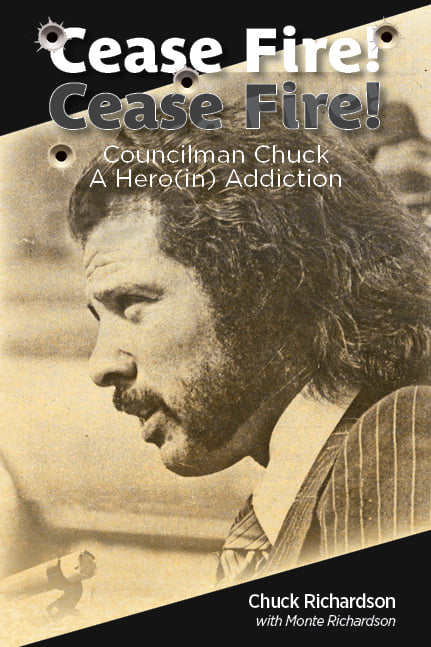
Former Councilperson Chuck Richardson, who once represented Oregon Hill on City Council, is releasing an autobiography this Saturday at the Black History Museum. (Registration is required – see details at this link: https://chuckrichardson.EventBrite.com). Its entitled “Cease Fire! Cease Fire!: Councilman Chuck, A Hero (In) Addiction” (click title to go the book website).
Henry W. “Chuck” Richardson tells his life story in his own words with his brother Monte Richardson. With a foreword by Dr. Raymond P. Hylton,
Chair of the Department of History at Virginia Union University, Cease fire! Cease fire! includes dozens of personal pictures and historic events in
Richmond, Virginia.
If poll choices are not visible, please use this link to go to poll.
Dear Ralph,
I have become aware that the City of Richmond Mayor Stoney is begging for more assistance from the state of Virginia in regard to the city’s utility budget. His letter, dated July 7 and signed by the nine Democratic Party members of Richmond’s delegation to the General Assembly, asks for money to pay for improvements to Richmond’s sewer system from the influx of $4.3 billion the state is to receive from the federal American Rescue Plan. Now, normally, as a king, I loathe interjecting in matters between your state and and the city or bothersome party politics, just as I know that you, as a state official, do not wish to become too involved in local city matters. That said, two things are causing this exception from normal – one, the amount of American money requested, $833 million, is rather large and meaningful; and, two, I am personally offended by how the City uses its water utility to take advantage of its own citizens, especially its most impoverished. Therefore, as the King of Oregon Hill, I am writing to ask that you give Mayor Stoney’s request more scrutiny, and perhaps even rejecting his plea altogether until certain considerations are met.
As you are already aware, the City of Richmond as well as your Commonwealth of Virginia overall, are very blessed with a plenitude of water, especially in comparison to western American states. In the past, city officials have taken this natural blessing for granted and used it to help wash away the city’s wastes, and consequently polluted the James River. Sewer overflow, as citizens have come to know it, is rightly seen far and wide as a large, embarrassing, decades-old problem that must be corrected. I give that environmental effort my royal benediction. If I felt that this matter was all this was about, I would leave this to yourself and others to freely administer.
But City officials over time abused the water wealth in other ways, and have unwisely become dependent on unfairly bilking their own constituents. I point to four problematic practices –
1) A payment line (I believe the bureaucrats refer to it as a PILOT) in the citizens’ water bills that goes straight to the City’s general fund, money that has not necessarily gone to paying for water/sewer or anything other than padding the City’s budget. The city’s PILOT surcharge on water includes a reprehensible payment in lieu of federal income tax. I will note that Paul Goldman, former chairperson of the Democratic Party of Virginia, has also called attention to this ‘rip-off’ of Richmond citizens (sans lawsuit, so far…).
2) Bad water agreements with the surrounding counties that sell the the City’s water at low, wholesale prices. Indeed, the City is charging it’s own citizens more for the water than the counties are charging theirs for the water their governments are buying from the City. These low prices for this valuable natural resource are encouraging an even more horrible waste through growing suburban sprawl in the counties, which in turn is polluting the James River even more.
3) High minimum water rates for residents. At one point in the past, the local Green Party ran a contest that would award anyone who could find a higher residential minimum water rate that was comparable to the City of Richmond’s anywhere else in the country- no one won (The City administration later lowered the rate just enough that the contest could not be run again). It is shameful that the City keeps crying poverty, creates whole public bureacracies devoted to ‘wealth building’, but still insists on high minimum rates which place an unfair burden on its poorest residents for what is a basic human need. I have heard one wealthy white resident defend this longtime practice as a way “to claw back some of the money that spent on public housing’ (for black residents).
4) The overall utility and water situation favors large corporations over residents. The utility rates in effect award large volume users while punishing poor residents. It discourages conservation. This is also reflected in other matters – for example, how Dominion Power company is allowed to release water from its coal ash ponds while discouraging other uses like micro hydropower on the James River. Again, it pains me to watch how the City not only weaponizes its water utility against its own residents, but squanders and abuses its natural blessing of water wealth. It is truly offensive and deserves repudiation.
It should be noted that citizens have tried to bring these problematic and unfair practices to the State Attorney’s attention, state representatives’ attention, the Mayor’s attention, to City Council’s attention, to the media’s attention, and to the larger populace’s attention, all with limited effect. Water rates have been brought up by mayoral and council candidates as a campaign issue, only to be forgotten or abandoned by those who win office. Reporters shrug their shoulders and tell me that Richmond uses its water utility in this manner to balance its budget, never mind how regressive it is and how it would make more sense to charge large volume users more instead of overcharging its poorest residents.
Ralph, it is widely reported that you and Terry regard Levar as a ‘rising star’ in your political party, but you should not be blind to what is important here – yes, the City needs money to repair its sewer system in order to help the environment- very much so. But keep in mind that the City has been using the sewer overflow problem as a reason to beg money from the federal and state governments for years and years. And while Richmond has undoubtedly realized many benefits from its CSO control program, the City is not doing as good as a job as it should in regard to stewarding it’s water wealth for the benefit of ALL of its citizens and the environment. And in the REAL big picture, these underlying issues will only deepen and become more exacerbated as climate change reduces the current water wealth. In your speeches, Governor, you talk about how Virginia needs to become more progressive and future-oriented. I contend Richmond’s backwardness must change in order for that to happen.
I cannot command, but I strongly recommend your office consider rejecting the Mayor’s plea until City officials, including the Mayor and City Council, publicly and sincerely promise to phase out the PILOT payment, renegotiate its county water agreements, and fully reform its utility water rate structure. Yes, the City desperately needs the money to correct the sewer overflow problem, but it must reform its water utility and water wealth management in order to have that money spent well.
While I do not have power over the Commonwealth of Virginia, I do claim sovereignty over Oregon Hill within the City of Richmond, and I feel it is my duty to look over the interests of citizens. I am hoping this letter will prevent future interventions.
Please feel free to contact me if you have any questions or concerns.
Regards,
Scott Burger
King of Oregon Hill
Dear Delegate Carr and Councilperson Lynch,
I hope you all are doing well and staying healthy. I recognize that the pandemic is not over and I do believe you both should be commended for your public service during this emergency. Councilperson Lynch, I was delighted and relieved to hear that you recovered from your COVID-19 infection. Congratulations to you and your family!
I am writing for two reasons.
One is to follow up on an earlier request for information and attention for the implementation of ranked choice voting. My understanding is that Governor Northam’s budget provides $16.7 million GF in FY 2021 to support and replace the Virginia Election and Registration Information System (VERIS) with more modern systems that must be compatible with RCV ballots. I appreciated your earlier reply but with the replacement of VERIS becoming more viable and the dismissal of the previous City Registrar, I am hoping to hear more on this now.
Secondly, and somewhat related, I was intrigued when I read that Richmond City Council’s Governmental Operations Committee is expected to begin reviewing the city charter, or constitution, for potential amendments.
As you know, this is important as the city charter is Richmond’s governing document and lays out how the local government should function. It also outlines the rules and expectations for elected officials.
In addition to advocating for ranked choice voting as a board member for FairVoteVirginia.org, I am also a supporter of www.MoveToAmend.org, a national group dedicated to amending the federal constitution in order to establish that corporations are not people and that money is not speech. While there is certainly a lot happening on the national level with Congressional Representative Pramila Jayapal’s introduction of the The We the People Amendment, I am very much interested in seeing complimentary local and state level actions.
I will note that the City of Charlottesville’s City Council passed a resolution in support of a federal constitutional amendment back in 2012. Councilperson Lynch, you may remember that I asked specifically if you would introduce and support a similar resolution to Richmond City Council back when you first ran for your seat, and you replied in the affirmative. Now that you are in your second term, so to speak, I think it is fair to make this request again.
Certainly, Virginia is at a crossroads when it comes to campaign finance reform and its leaders putting their allegiance to citizens before corporate power. We are seeing a lot of ‘big money’ already effecting the election race for Governor. Attempts to reign in Virginia’s unusually unrestrictive campaign finance system have so far gone nowhere in the General Assembly. The Commonwealth of Virginia is different from other states in that it does have its own state constitution. Delegate Carr, would you be willing to propose an amendment to the Virginia constitution similar to what MoveToAmend.org and Congressional representative Jayapal are proposing for the federal constitution?
Again, I greatly appreciate any information or attention you can give to my humble requests for Richmond and our Commonwealth.
Sincerely,
Scott Burger
Todd Woodson, past OHNA president, past Sierra Club Falls of the James ‘Green Giant’ award winner, and past member of City Council’s Monroe Park Advisory Council, released this post this morning:
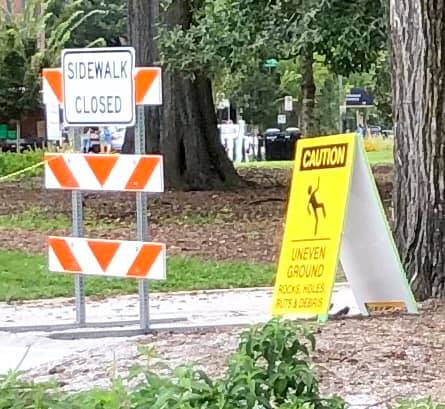
NO CITY MONEY FOR THE MONROE PARK CONSERVANCY!
Friends- the writing is on the wall! As Historic Monroe Park falls deeper into dereliction only two years after an $8 million dollar renovation, it has become obvious that even though 2020 set a record for charitable giving, the Monroe Park Conservancy – the group responsible for the Park’s sad condition, is broke and can’t honor their agreement with the City. Alice Massie and treasurer Matthew Stanley have defied federal regulations by refusing to allow their form 990’s to be reviewed by the public. Having exhausted all sources of charitable giving, it is inevitable that this “conservancy” will or have asked the City for a bail out, using tax payer money. It will take millions to repair the damage they and they alone have caused to our most historic park. The answer should be a resounding NO! It is time to terminate the lease and put the historic park back in the hands of the community under our capable Parks Department’s management. Giving Massie and Matthew Stanley (who is also Outreach Director for Richmond Public Schools) more money would be an egregious waste of our hard earned dollars. Reach out to your representatives and ask that they terminate the lease immediately and fix the park with public restrooms, usable pathways and a RESTORED TREE CANOPY!
At this past OHNA (Oregon Hill Neighborhood Association) meeting, Councilperson Stephanie Lynch was asked if there was any news on Monroe Park. She replied that there was none other than rumors of financial difficulty on the part of the Monroe Park Conservancy and she did not know of any City Council requests to rescind the lease (something that OHNA has previously requested).
Given some of the same issues of park use and attempts at privatization, it is noteworthy that near the riverfront side of Oregon Hill, during or shortly after the recent ‘zombie show filming’, a sign went up in the Belle Island (part of the James River Park system) for “private parking”. The city’s lease with Venture Richmond stated that they would retain free parking in the Belle Isle parking lot i.e. public parking.
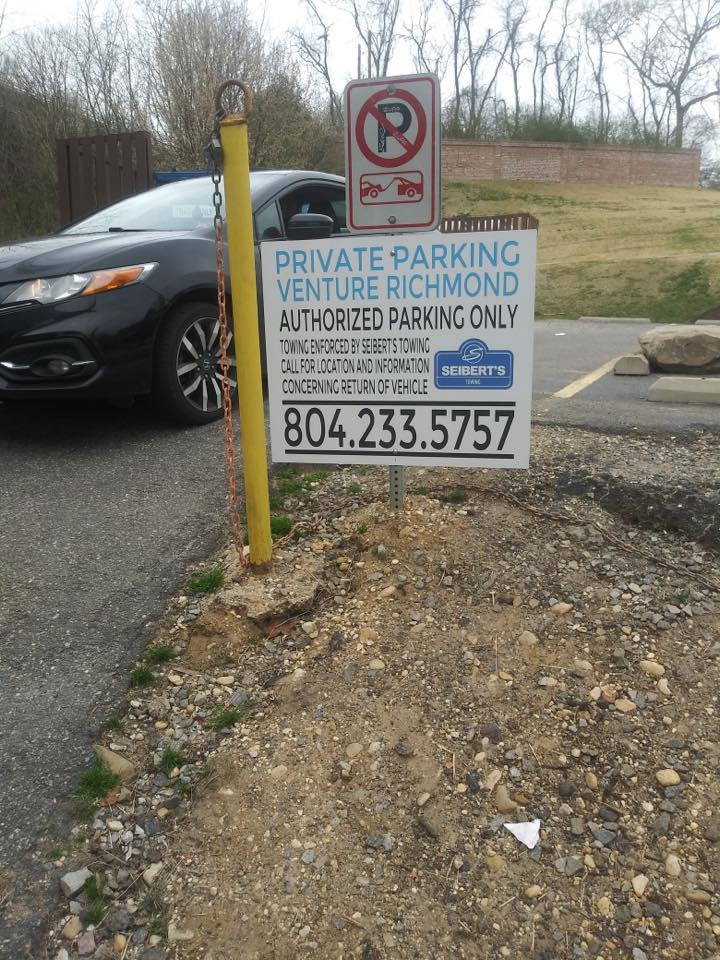
After citizens made inquiries, Venture Richmond quickly said more recently that the new signs would come down and blamed the towing company for misunderstanding. Many citizens remain skeptical and believe this was yet another attempt to sneak in privatization. Oregon Hill residents, including Todd Woodson, remain vigilant in trying to watch over Venture Richmond and other ‘public-private partnerships’.
And on that score, one other thing- Oregon Hill residents have heard that Dominion is planning to move ahead with its proposed solar array on top of its riverfront parking garage (which, btw, is not shared with the public for parking). While many Oregon Hill residents are very much in favor of renewable energy, this is in violation of the hard won height agreement there (which OHNA, the Sierra Club Falls of the James, and other community and environmental groups are part of). What does this mean if Dominion is not going to be held accountable for its own agreements that are there to protect a public view?
When you look at all that has recently been proposed around the neighborhood, including Richmond300 shenanigans to ‘affordable housing’ initiatives, it is time is to send some universal messages- BACK OFF! AND STOP TRYING TO TAKE FROM THE PUBLIC! Return Monroe Park to the public!
P.S. Please do click through the links in this editorial and appreciate the time and energy that Oregon Hill residents have sacrificed to protect this neighborhood and what belongs to the City and public in whole. The local corporate media often does not give the complete picture in these matters and we need everyone to recognize how corporate hegemony, be it from institutions like VCU, be it from private companies like Dominion, be it from ‘public-private partnerships’ like Venture Richmond, be it from our own compromised City government, is acting against us. (Coming soon to this community news site, more on how we can fight back on the local, city, state, and national level…)
While there was lots of important neighborhood-centric discussion at last night’s OHNA Zoom meeting, one other thing the neighborhood association did was vote to support ranked choice voting for City offices.
It should be noted that while OHNA has not yet had an occasion to use ranked choice voting for its own elections, it has been part of the organization’s bylaws for several years now.
As interest in ranked choice voting grows locally, voters may want to attend this upcoming webinar to learn more about it:
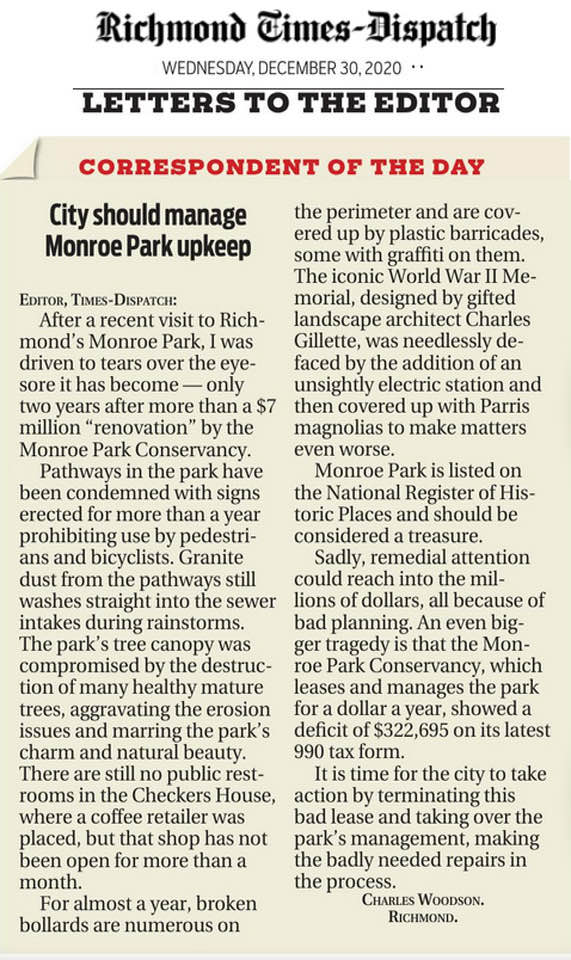
Let’s hope the new 2nd District City Council representative, Katherine L. Jordan, will move to terminate the lease.